
Test mindset — tiny assertions, AAA, red→green→refactor
Build the habit of writing tiny tests: understand assertions, Arrange–Act–Assert, and the red→green→refactor loop.
Test mindset — tiny assertions, AAA, red→green→refactor is a free JavaScript Academy lesson on CoddyKit. This is lesson 1 of 3. Any 3 lessons of this learning path are free to read in full — after that, CoddyKit PRO unlocks every lesson, plus hands-on practice with a built-in code editor and a 24/7 AI tutor. It is part of the JavaScript Academy learning path, and your progress syncs across the web and the CoddyKit app. The JavaScript Academy course includes 3 lessons in total.
Why test mindset?
Goal: Think in tiny, reliable tests.
- Small assert to check results
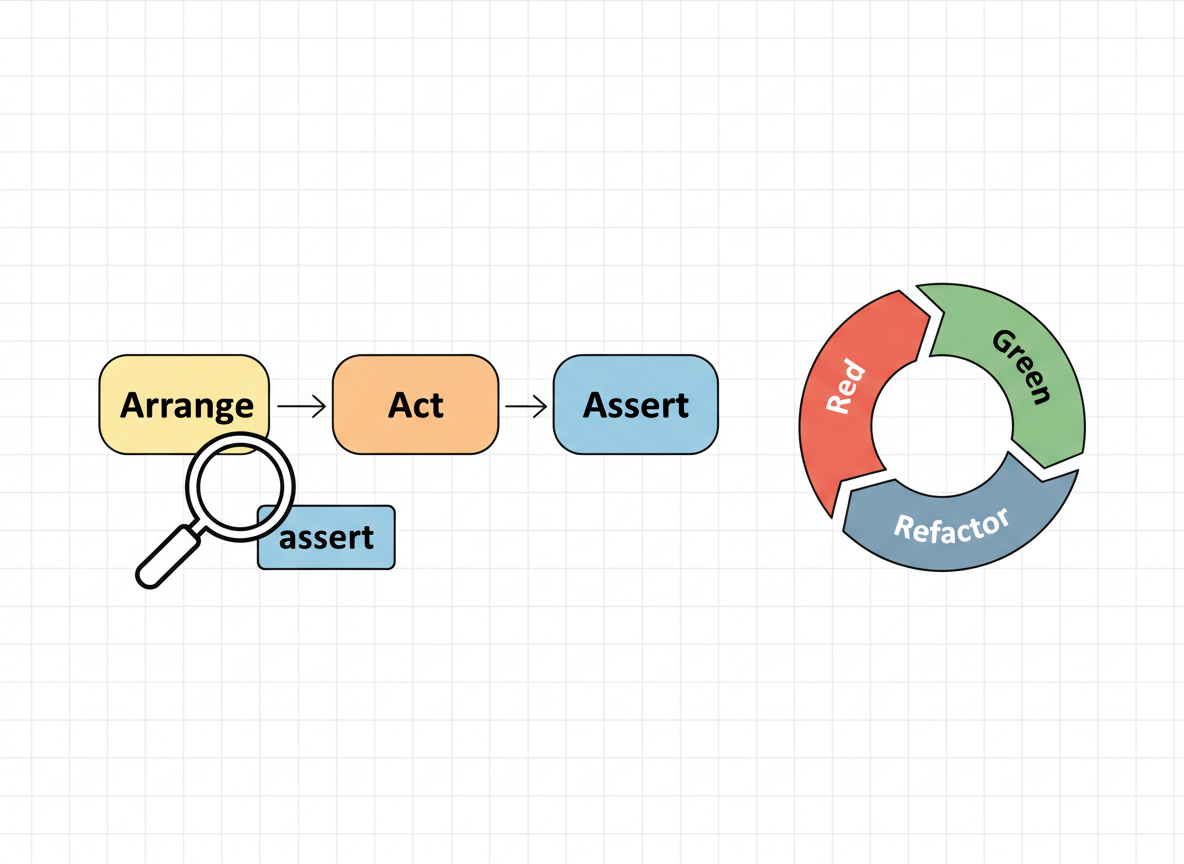
- AAA: Arrange → Act → Assert
- Red → Green → Refactor loop
- Name tests by behavior
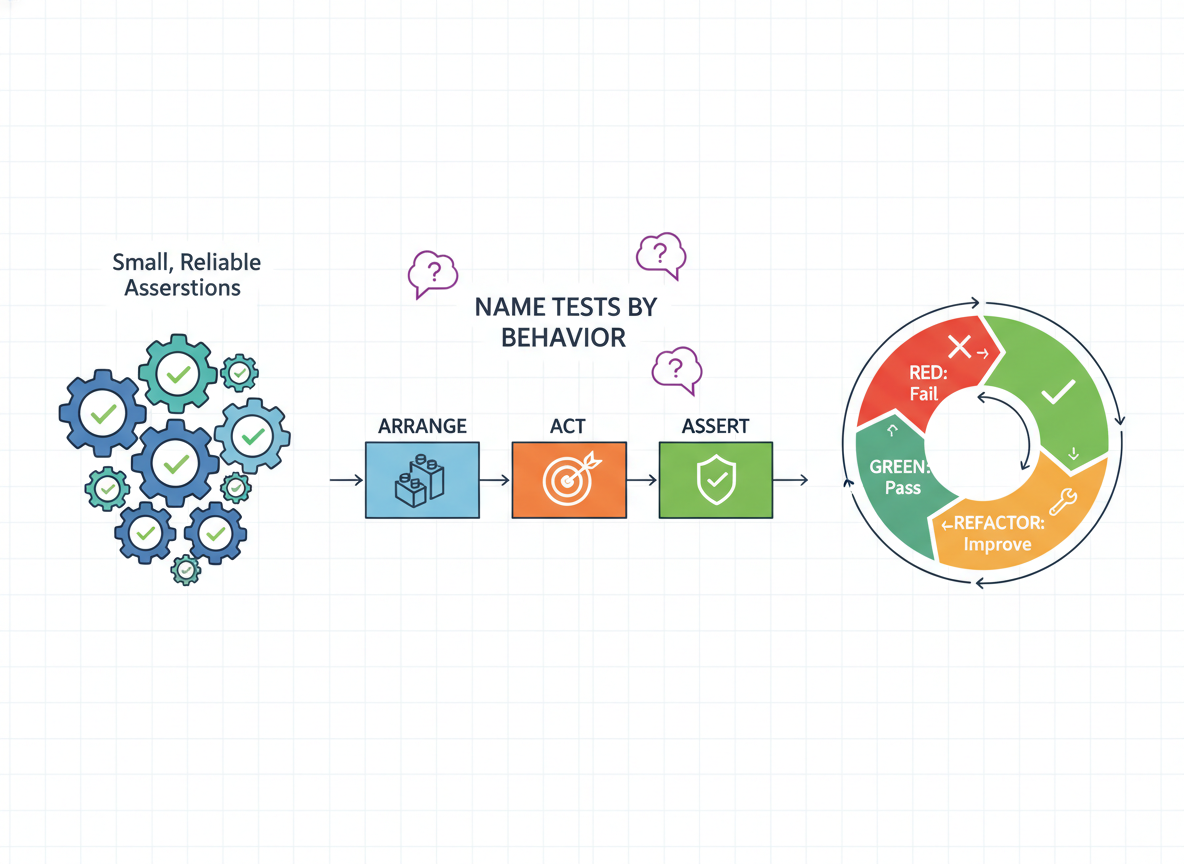
A tiny assertion
A tiny assertEqual prints pass/fail. This mirrors what real test frameworks do.
// Minimal assertEqual for quick checks
function assertEqual(actual, expected, name) {
  if (actual === expected) {
    console.log("✅", name);
  } else {
    console.log("❌", name, "expected:", expected, "got:", actual);
  }
}

// Demo check
assertEqual(2 + 3, 5, "adds numbers");
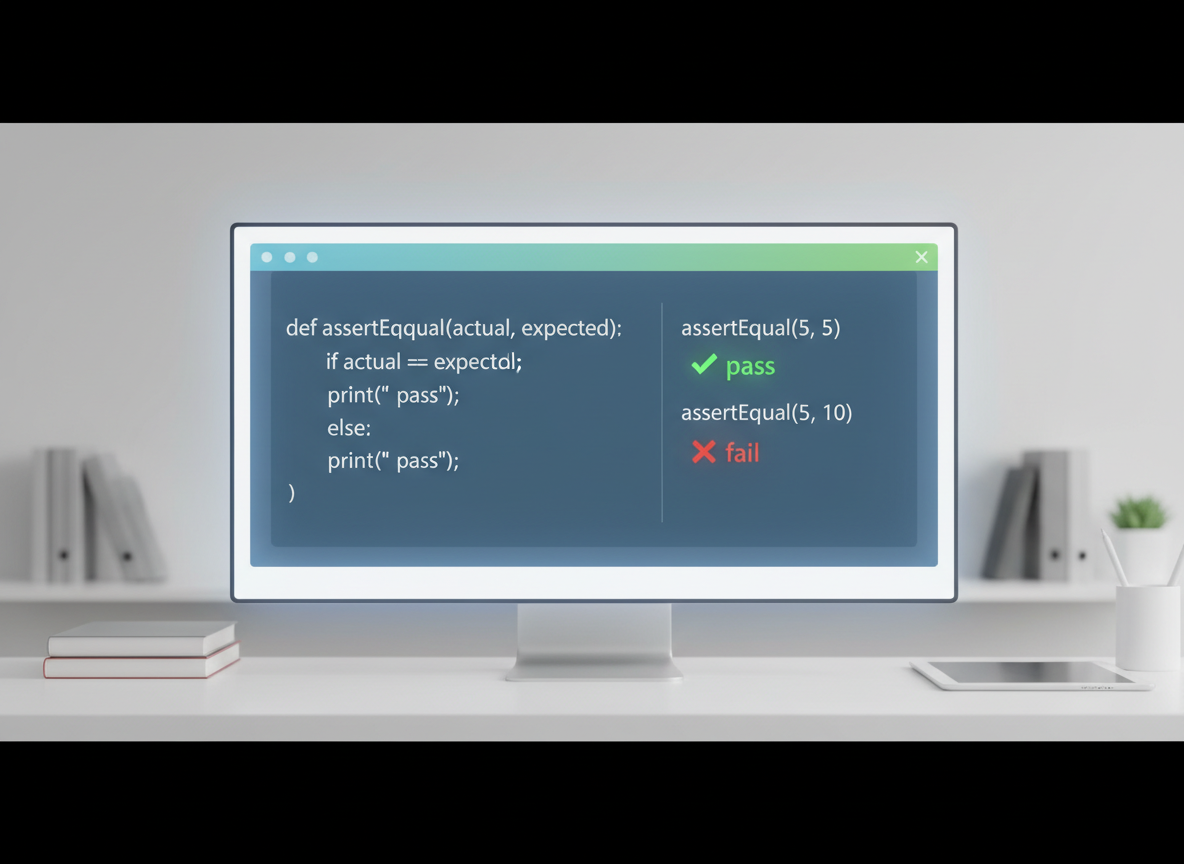
Arrange–Act–Assert
AAA keeps tests readable: prepare data, call the function, then check the result.
// AAA: Arrange → Act → Assert
// Arrange: prepare inputs
function sum(a, b) { return a + b; }
const a = 2;
const b = 4;

// Act: call the function
const result = sum(a, b);

// Assert: compare
assertEqual(result, 6, "sum returns a + b");
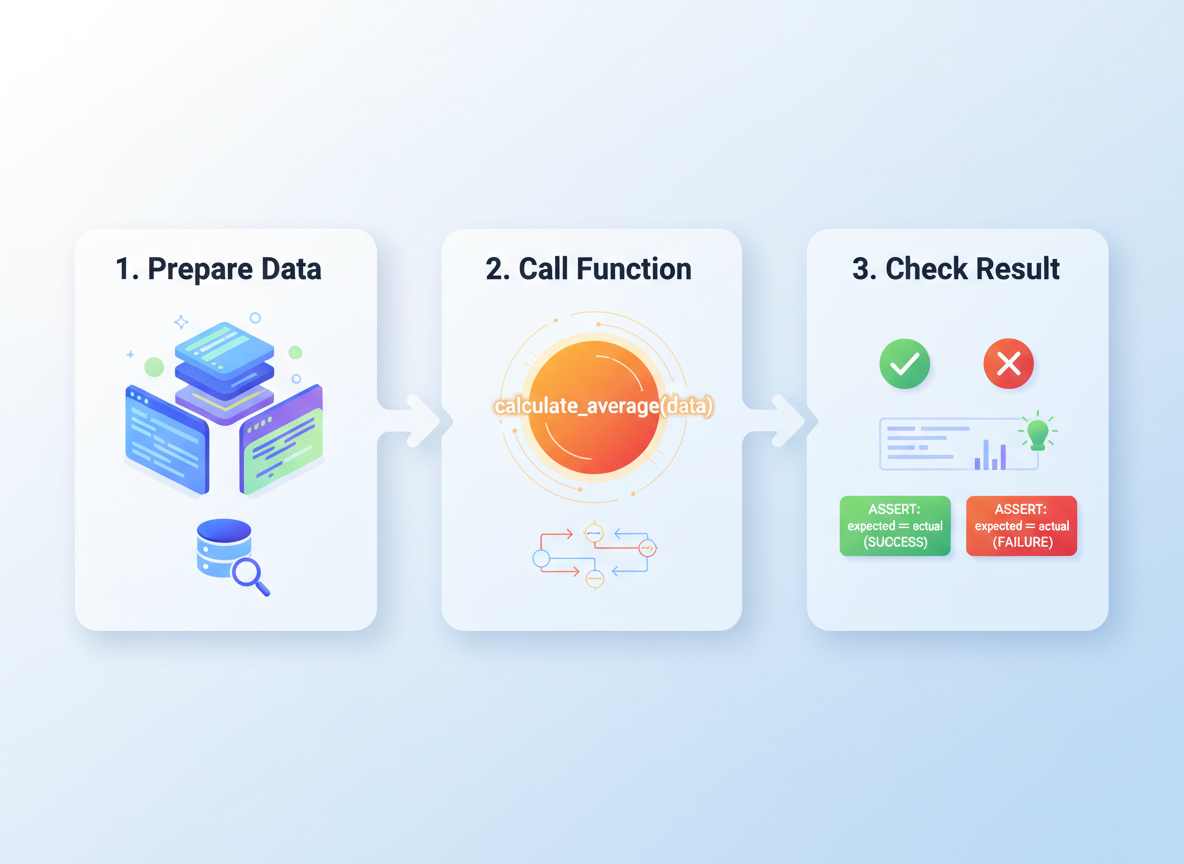
Red→Green→Refactor
Write a failing test (red), make it pass (green), then clean the code (refactor).
// Red → Green → Refactor with a tiny example
// 1) Red: write a failing test (expect wrong implementation)
function greet(name) { return "Hi " + name; } // simple implementation

// Intentionally failing expectation first (red)
assertEqual(greet("Ayla"), "Hello Ayla", "greet says Hello"); // likely fails

// 2) Green: fix the code to satisfy the test
function greetFixed(name) { return "Hello " + name; }
assertEqual(greetFixed("Ayla"), "Hello Ayla", "greet says Hello (fixed)");

// 3) Refactor: improve code without changing behavior
function greetRefined(name) {
  const cleaned = String(name).trim();
  return "Hello " + cleaned;
}
assertEqual(greetRefined(" Ayla "), "Hello Ayla", "greet trims input");
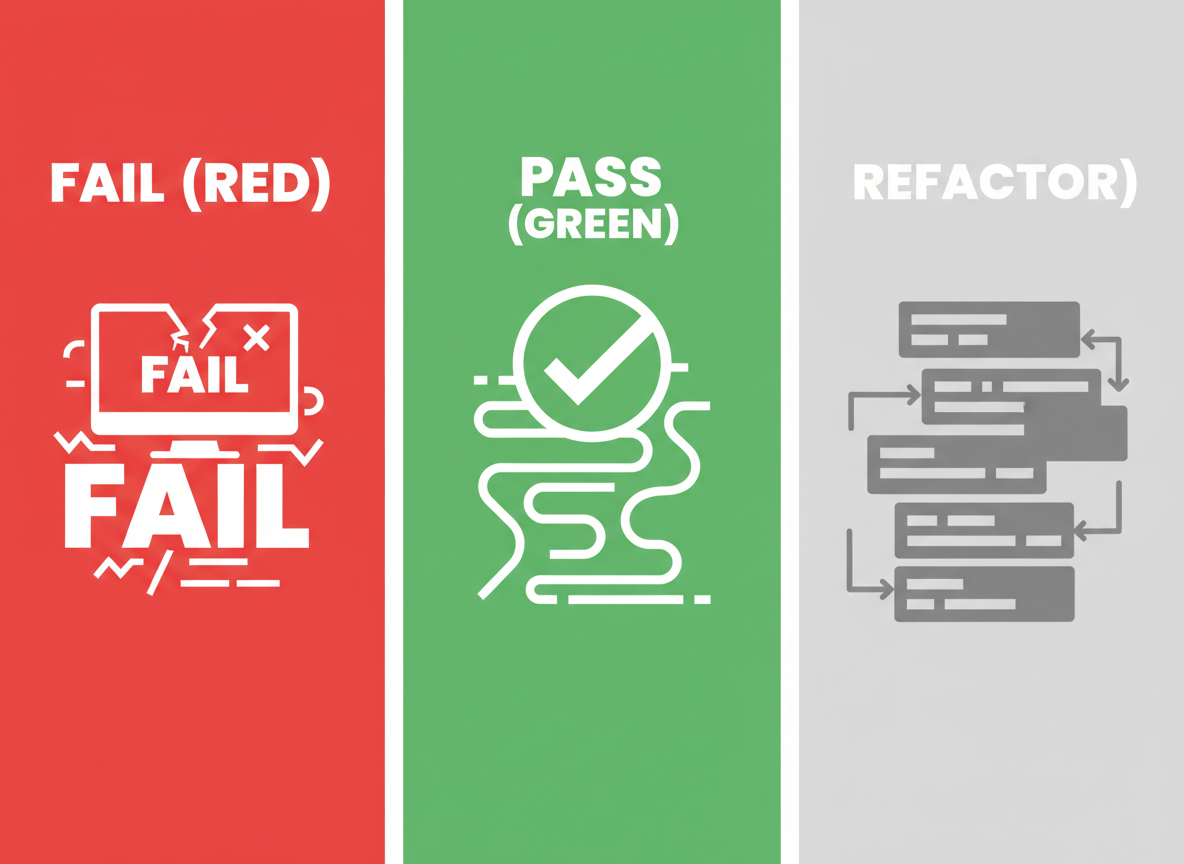
Behavior-focused names
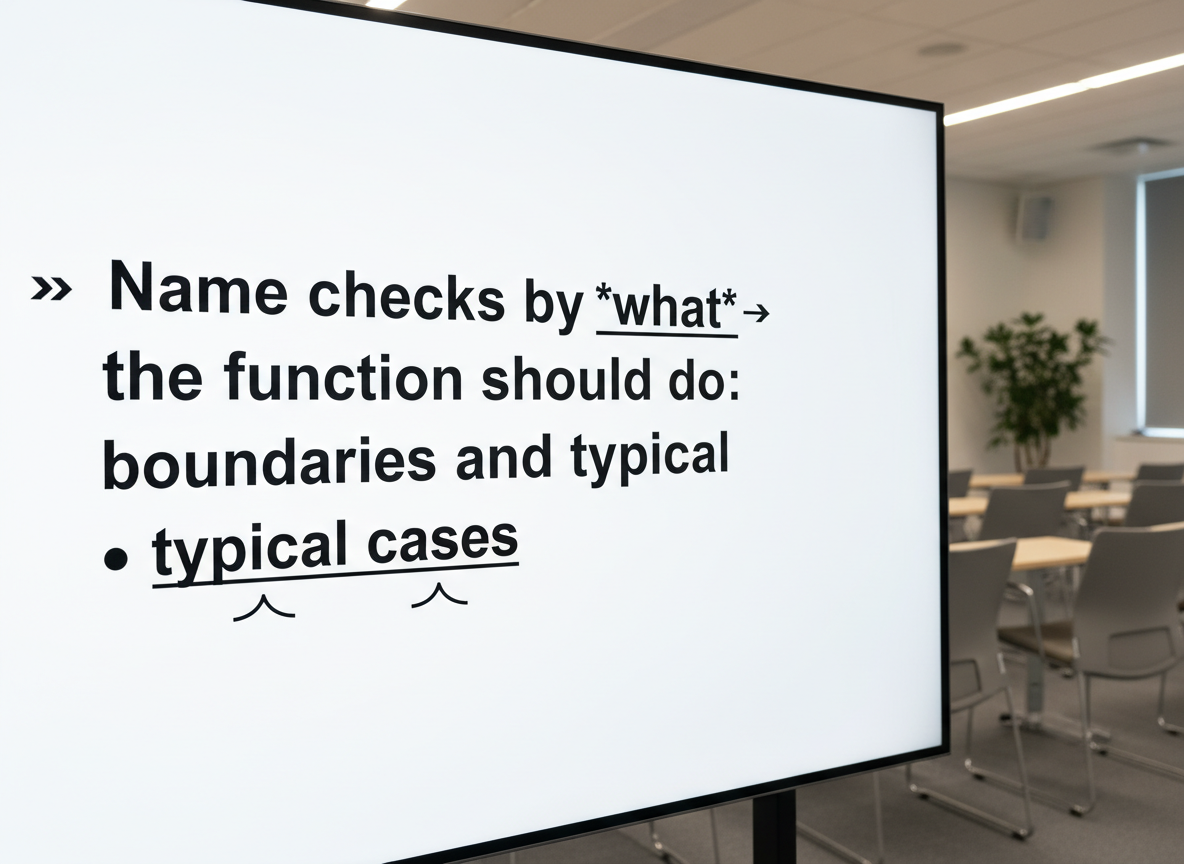
Name checks by what the function should do: boundaries and typical cases.
// Clear names describe behavior, not internals
function isAdult(age) { return age >= 18; }

assertEqual(isAdult(18), true, "isAdult returns true at boundary 18");
assertEqual(isAdult(17), false, "isAdult returns false below boundary");
Tiny, focused tests
Tips:
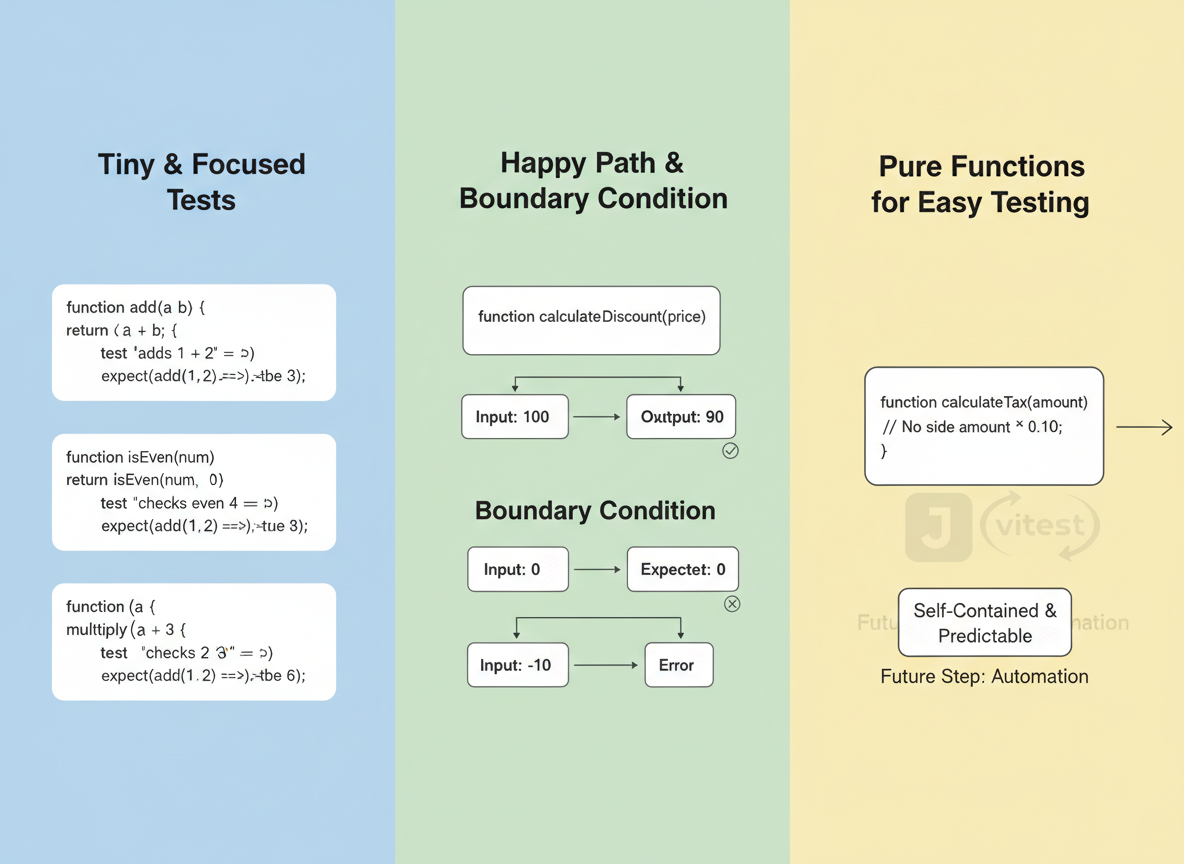
- Keep tests tiny and focused (one idea each).
- Test happy path and one boundary.
- Prefer pure functions for easy testing.
- Automate later with Jest/Vitest; mindset first.
AAA pattern quiz
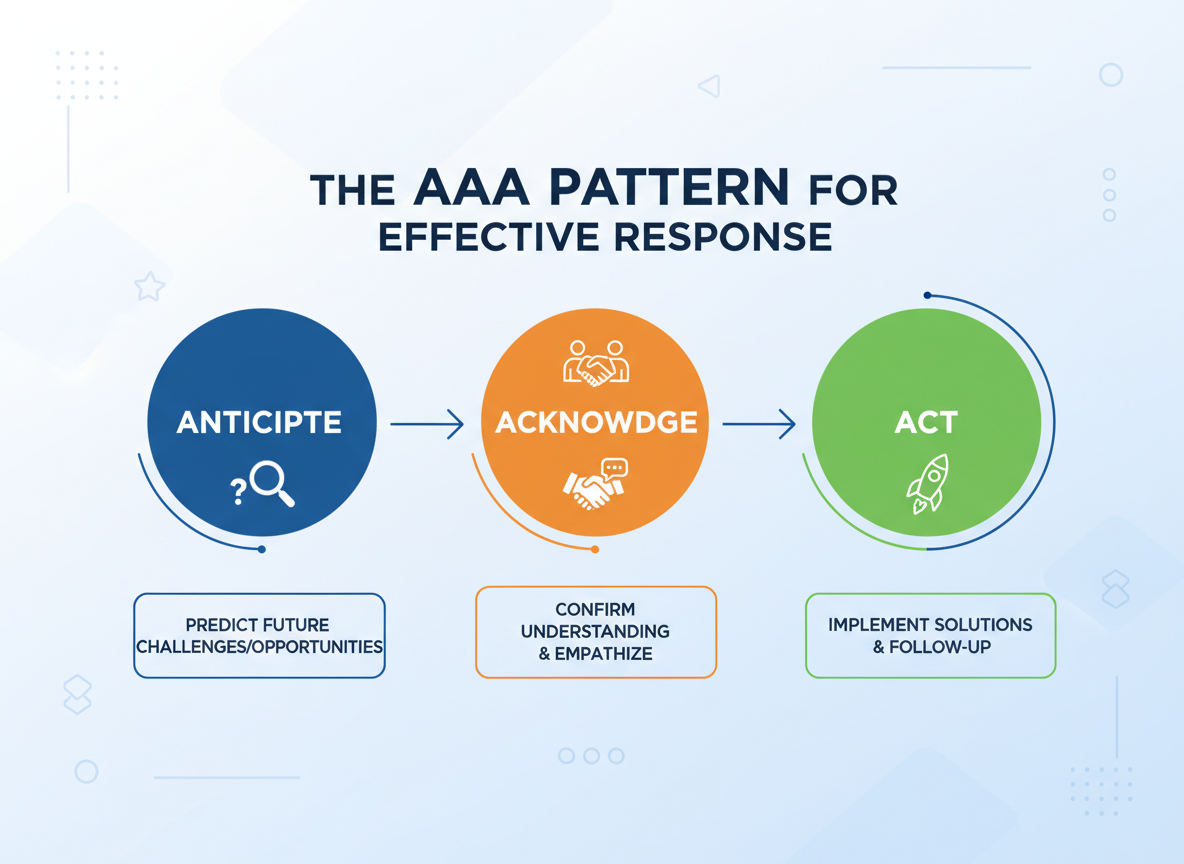
Quick check: AAA pattern.
Recap
Recap: Use a tiny assert, follow AAA, and iterate Red → Green → Refactor. Start small—clarity beats complexity for beginners.

Learn JavaScript with an AI tutor — free
Write and run real code in your browser, get instant help from a 24/7 AI tutor, and pick up where you left off on the web or in the app.
- Courses
- 59
- Lessons
- 200
Frequently Asked Questions
Is the “Test mindset — tiny assertions, AAA, red→green→refactor” lesson free?
Yes — any 3 lessons of the JavaScript Academy learning path, including “Test mindset — tiny assertions, AAA, red→green→refactor”, are free to read in full here on the web. After that, CoddyKit PRO unlocks every lesson, plus interactive practice with a built-in code editor and a 24/7 AI tutor. The JavaScript Academy course includes 3 lessons in total.
What will I learn in “Test mindset — tiny assertions, AAA, red→green→refactor”?
Build the habit of writing tiny tests: understand assertions, Arrange–Act–Assert, and the red→green→refactor loop. You practise JavaScript Academy with hands-on code you run directly in the browser, and a 24/7 AI tutor answers your questions as you work through the lesson.
Do I need any experience to start JavaScript Academy?
No prior experience is required. JavaScript Academy on CoddyKit is structured for beginners through advanced learners, so you can start here or from the beginning and move at your own pace. This is lesson 1 of 3.
How long does the “Test mindset — tiny assertions, AAA, red→green→refactor” lesson take?
Most CoddyKit lessons take about 5–10 minutes. Each one is bite-sized and interactive, so you make steady progress and pick up exactly where you left off across the web and the app.
Can I write and run code in this JavaScript Academy lesson?
Yes. Every JavaScript Academy lesson includes a built-in code editor, so you write and run real code right in your browser and get instant AI feedback — no local setup required.
All lessons in this course
- Test mindset — tiny assertions, AAA, red→green→refactor
- Linting with ESLint; Prettier formatting
- CI basics — run lint/test on every push