
E3 — Promise Pool/Queue (async concurrency)
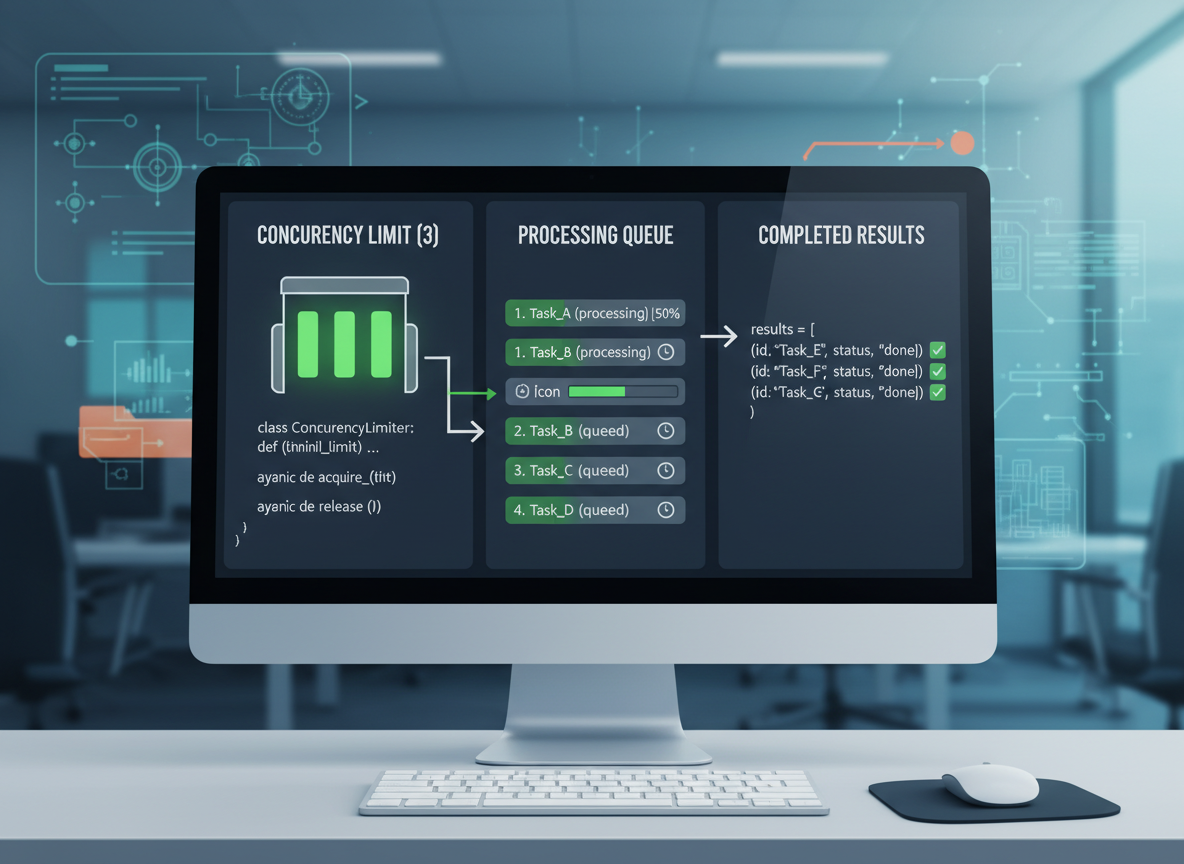
Run many async tasks with a small concurrency limit. Keep a queue, start a few at a time, and collect results.
E3 — Promise Pool/Queue (async concurrency) is a free JavaScript Academy lesson on CoddyKit. This is lesson 3 of 3. Any 3 lessons of this learning path are free to read in full — after that, CoddyKit PRO unlocks every lesson, plus hands-on practice with a built-in code editor and a 24/7 AI tutor. It is part of the JavaScript Academy learning path, and your progress syncs across the web and the CoddyKit app. The JavaScript Academy course includes 3 lessons in total.
What and why
Goal: Run many async jobs without flooding the system.
- Limit concurrency (e.g., 2 at a time)
- Keep a simple queue index
- Store results in an array
- Beginner-friendly code, small helpers
Async job helper
A tiny helper returns a Promise that resolves after a delay; optionally fails for testing.
// Simulate async work with setTimeout
function fakeJob(name, ms, fail) {
  return new Promise(function (resolve, reject) {
    setTimeout(function () {
      if (fail) {
        reject(new Error("fail:" + name));
      } else {
        resolve("done:" + name);
      }
    }, ms);
  });
}

console.log("demo job:", typeof fakeJob === "function");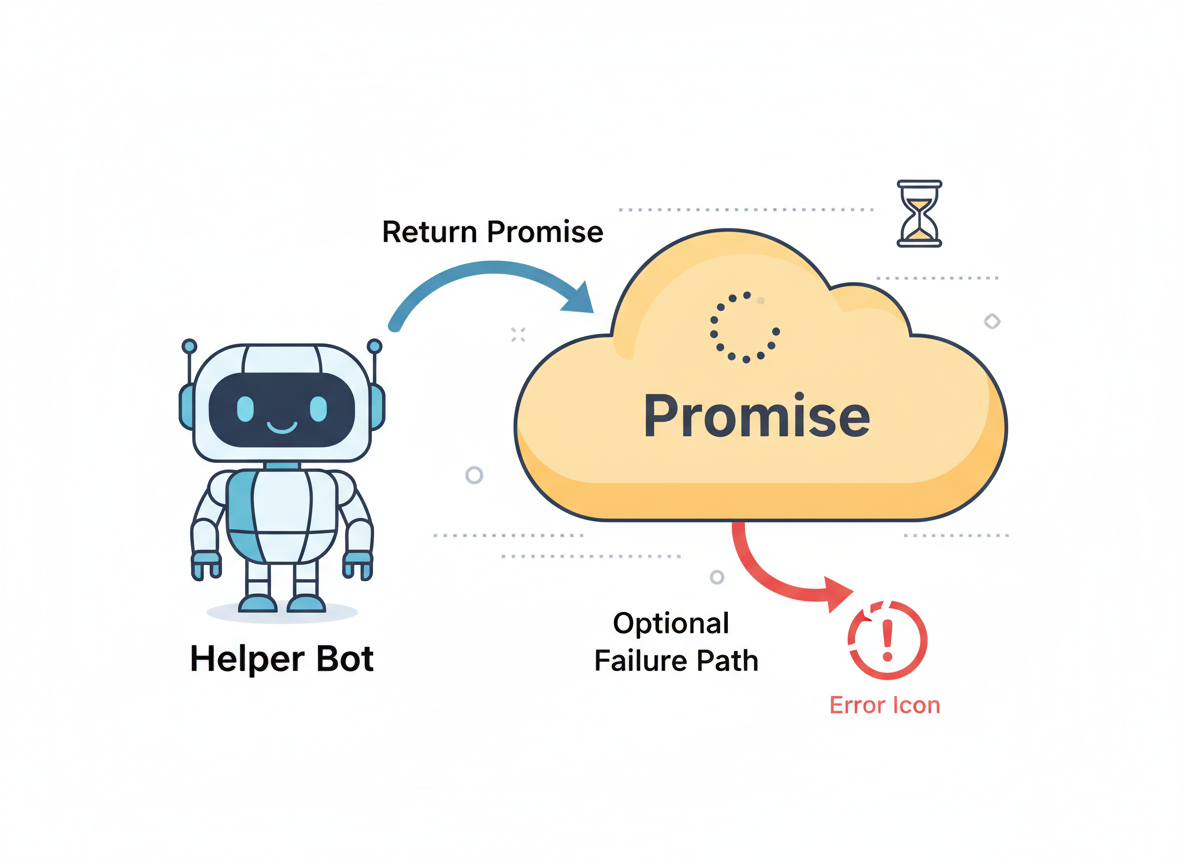
Pool implementation
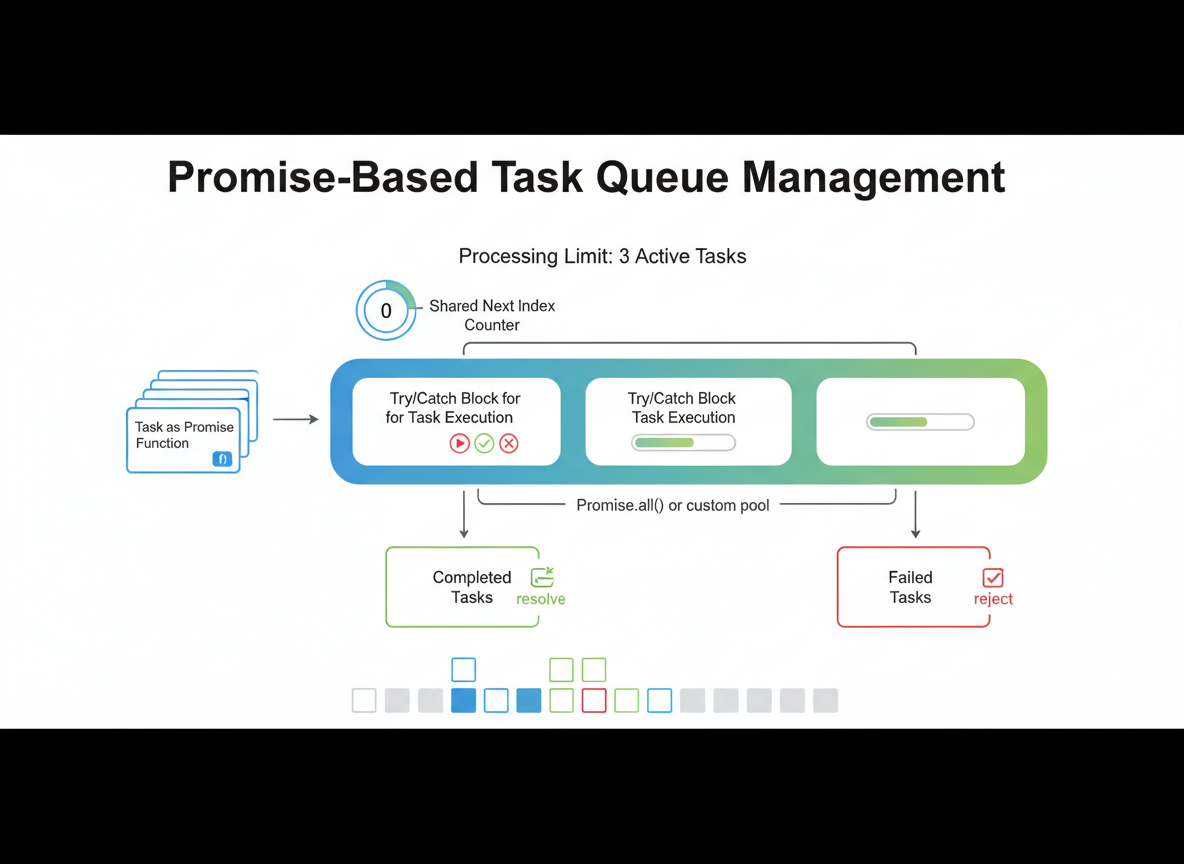
runPool starts a few workers; each pulls the next task index and awaits it. Results keep input order.
// Run tasks with a fixed concurrency limit
async function runPool(tasks, limit) {
  // tasks: array of functions () => Promise<any>
  const results = new Array(tasks.length);
  let next = 0;

  // worker runs tasks until none left
  async function worker() {
    while (true) {
      const i = next;
      if (i >= tasks.length) return;
      next = next + 1;

      try {
        const value = await tasks[i]();
        results[i] = { ok: true, value: value };
      } catch (e) {
        results[i] = { ok: false, error: String(e) };
      }
    }
  }

  // start up to limit workers
  const workers = [];
  for (let k = 0; k < limit; k = k + 1) {
    workers.push(worker());
  }

  await Promise.all(workers);
  return results;
}

console.log("pool ready:", typeof runPool === "function");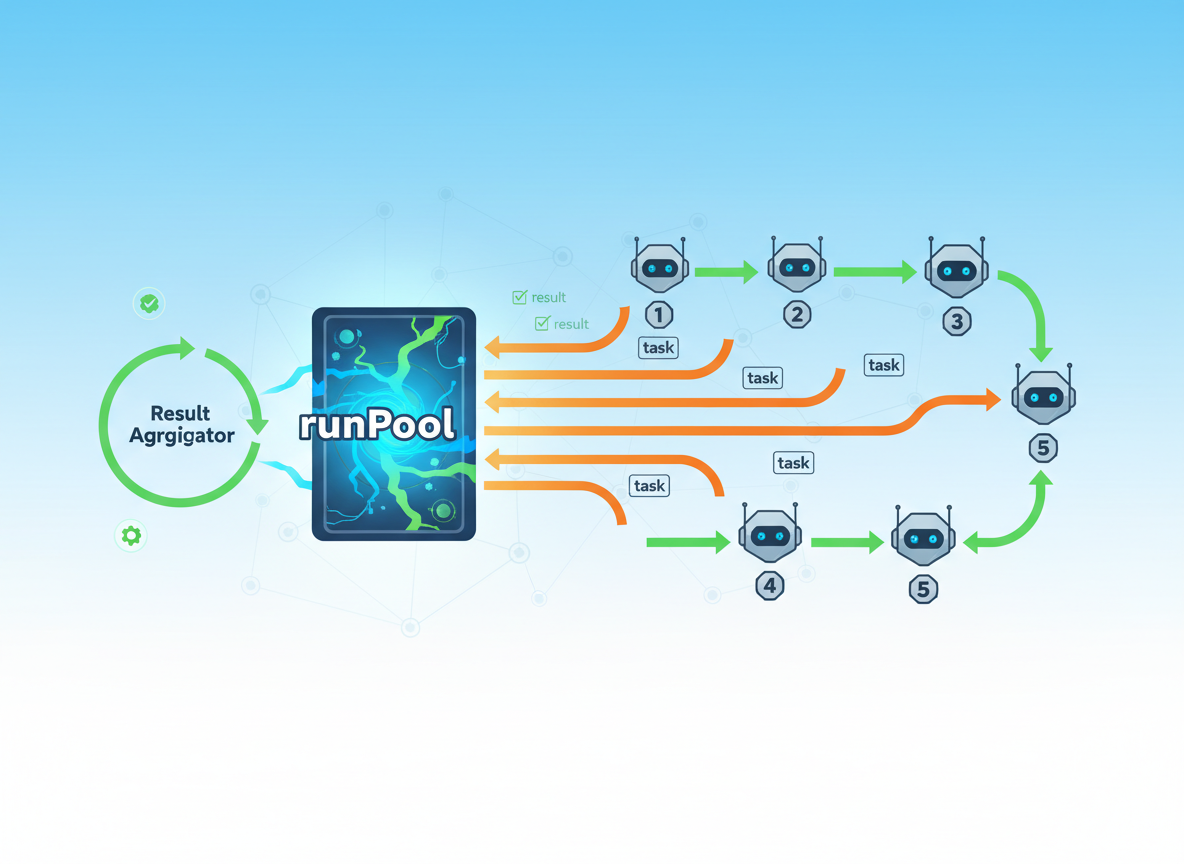
Run the pool
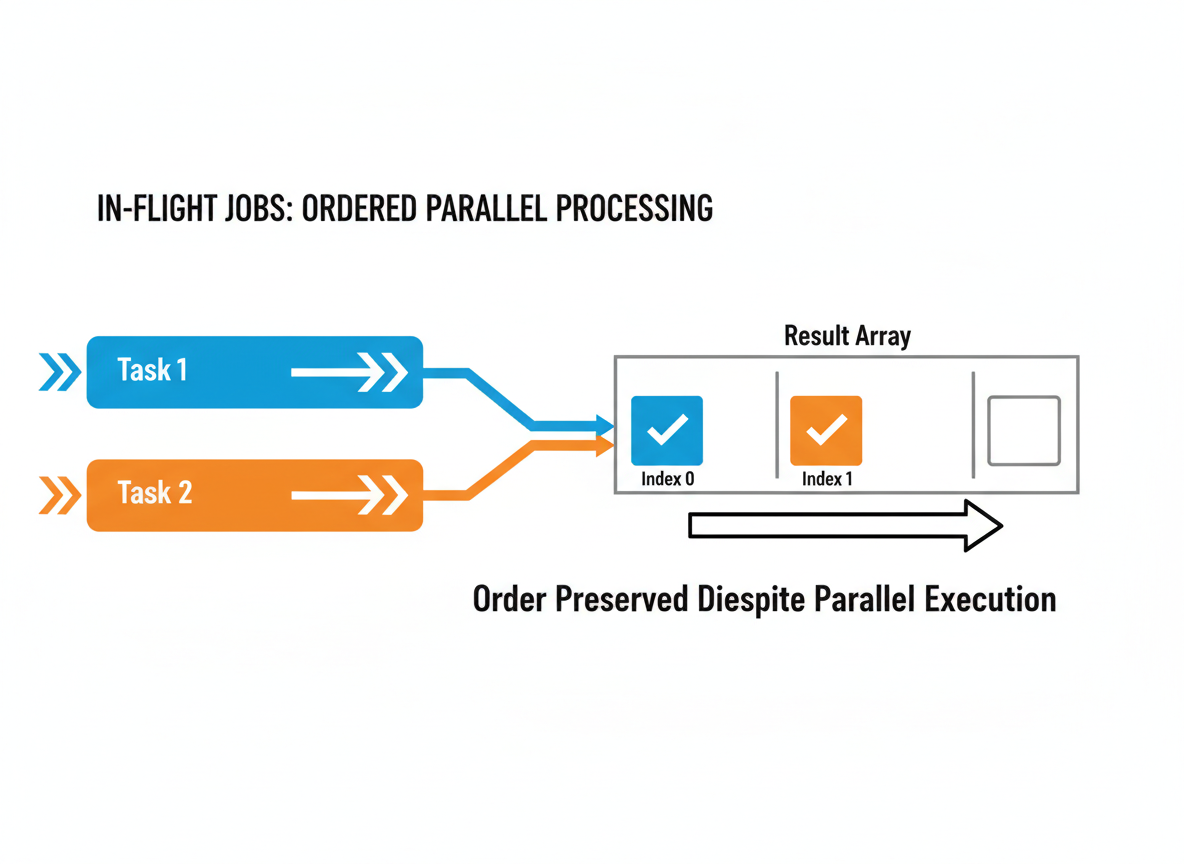
Limit to 2 in-flight jobs. The array keeps order: index i holds result of task i.
// Prepare simple tasks
const jobs = [
  function () { return fakeJob("A", 300, false); },
  function () { return fakeJob("B", 200, false); },
  function () { return fakeJob("C", 150, true ); },
  function () { return fakeJob("D", 100, false); }
];

// Run with concurrency = 2
(async function () {
  const out = await runPool(jobs, 2);
  console.log("results:", out);
})();
Optional retry wrapper
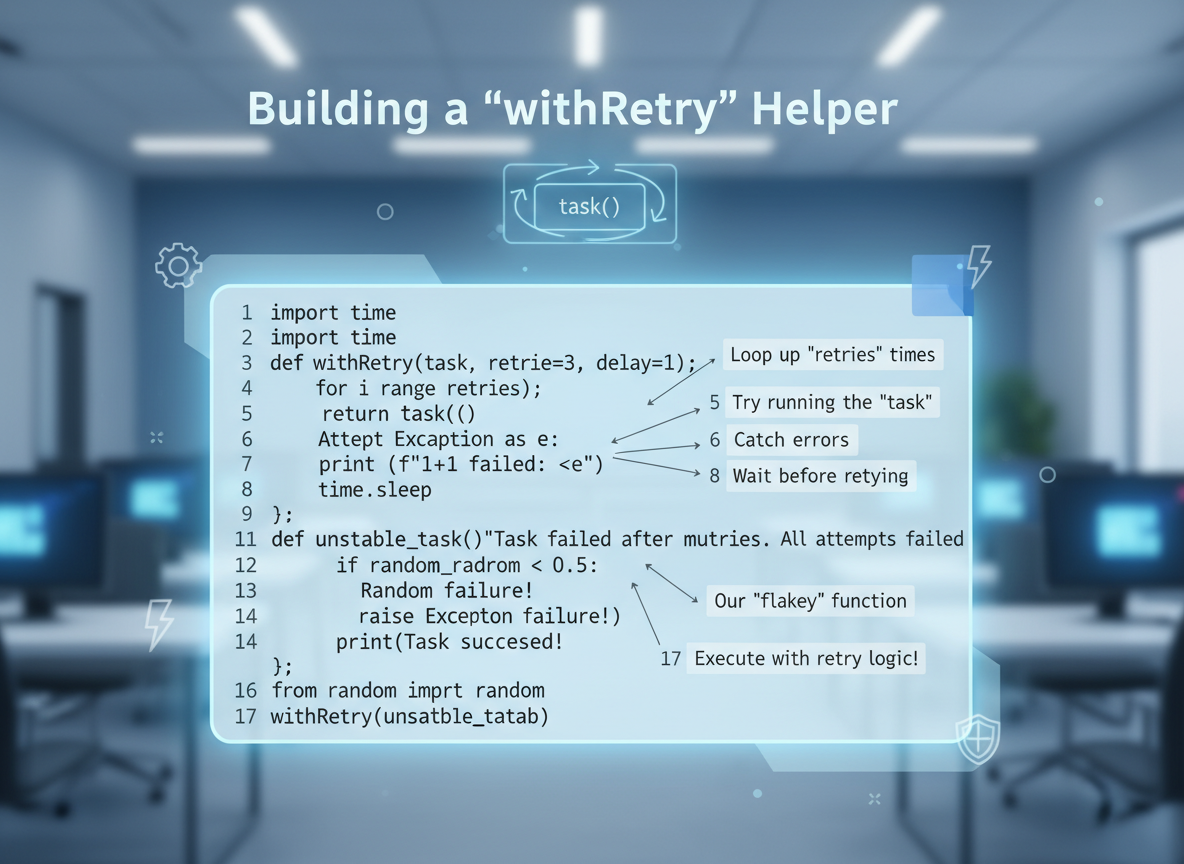
Wrap a task with a tiny withRetry helper. Keep numbers small and logic simple.
// Optional: add retry to a task wrapper (beginner-friendly)
function withRetry(task, attempts) {
  return async function () {
    let lastErr = null;
    for (let i = 0; i < attempts; i = i + 1) {
      try {
        return await task();
      } catch (e) {
        lastErr = e;
      }
    }
    throw lastErr;
  };
}

const jobsWithRetry = [
  withRetry(function () { return fakeJob("R1", 80, true); }, 2),
  withRetry(function () { return fakeJob("R2", 60, false); }, 2)
];

(async function () {
  const out = await runPool(jobsWithRetry, 1);
  console.log("retry results:", out);
})();
Beginner guidance
Tips:
- Store tasks as () => Promise functions.
- Keep a shared next index for the queue.
- Use try/catch per task and store results.
- Pick a small limit (2–4) for beginners.
Concurrency limit basics quiz
Quick check: Why a pool?

Recap
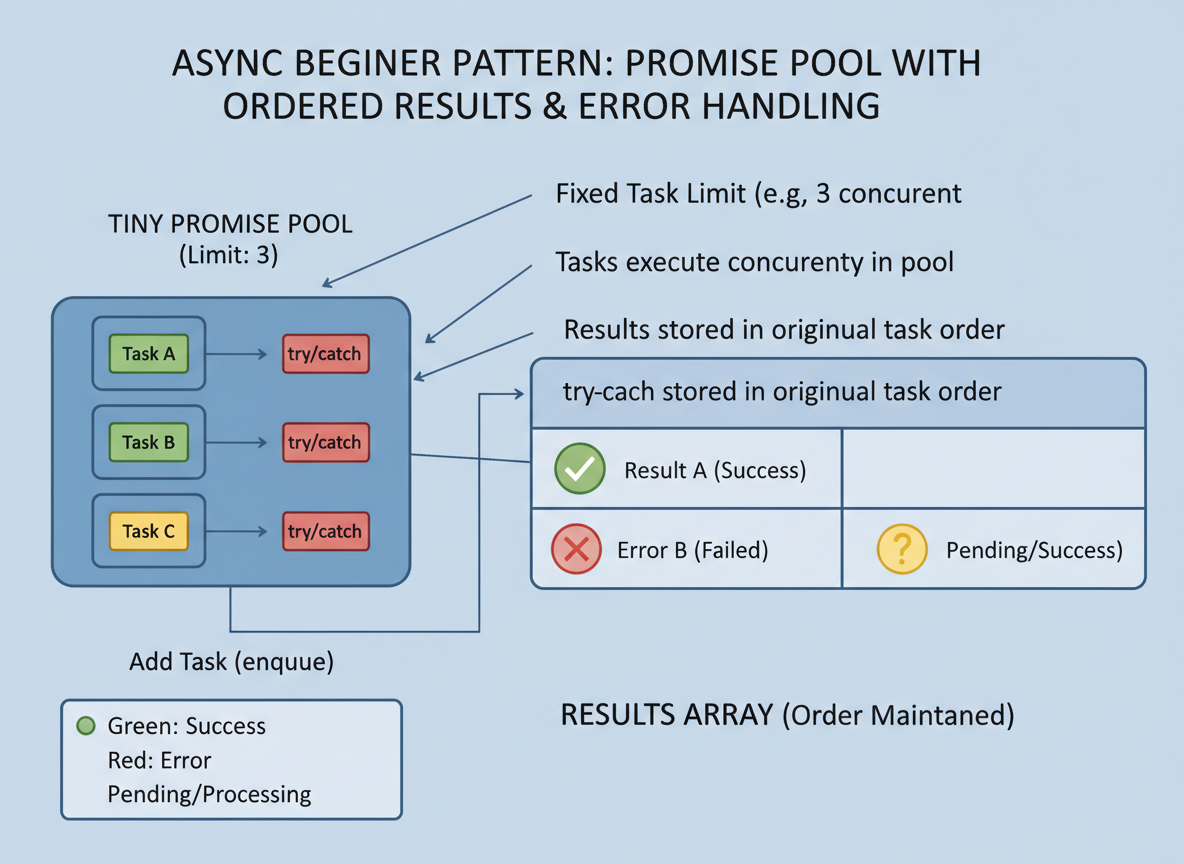
Recap: A tiny promise pool runs tasks with a fixed limit, keeps order in a results array, and uses simple try/catch for each task. Great beginner pattern.

Learn JavaScript with an AI tutor — free
Write and run real code in your browser, get instant help from a 24/7 AI tutor, and pick up where you left off on the web or in the app.
- Courses
- 59
- Lessons
- 200
Frequently Asked Questions
Is the “E3 — Promise Pool/Queue (async concurrency)” lesson free?
Yes — any 3 lessons of the JavaScript Academy learning path, including “E3 — Promise Pool/Queue (async concurrency)”, are free to read in full here on the web. After that, CoddyKit PRO unlocks every lesson, plus interactive practice with a built-in code editor and a 24/7 AI tutor. The JavaScript Academy course includes 3 lessons in total.
What will I learn in “E3 — Promise Pool/Queue (async concurrency)”?
Run many async tasks with a small concurrency limit. Keep a queue, start a few at a time, and collect results. You practise JavaScript Academy with hands-on code you run directly in the browser, and a 24/7 AI tutor answers your questions as you work through the lesson.
Do I need any experience to start JavaScript Academy?
No prior experience is required. JavaScript Academy on CoddyKit is structured for beginners through advanced learners, so you can start here or from the beginning and move at your own pace. This is lesson 3 of 3.
How long does the “E3 — Promise Pool/Queue (async concurrency)” lesson take?
Most CoddyKit lessons take about 5–10 minutes. Each one is bite-sized and interactive, so you make steady progress and pick up exactly where you left off across the web and the app.
Can I write and run code in this JavaScript Academy lesson?
Yes. Every JavaScript Academy lesson includes a built-in code editor, so you write and run real code right in your browser and get instant AI feedback — no local setup required.
All lessons in this course
- E1 — Expression Evaluator (part 1: + and - LTR)
- E2 — Log Analyzer (simple filters & counters)
- E3 — Promise Pool/Queue (async concurrency)