

LastDigit: Math Puzzle
LastDigit: Math Puzzle — Multiply the tiles and keep only the last digit
LastDigit: Math Puzzle is a free number puzzle for iOS. Swipe one row or one column at a time, and when two tiles meet they multiply, keeping only the last digit of the result. There is no luck and no sliding of the whole board, just logic and planning ahead to avoid dead ends.

- Price
- Free, with optional in-app purchases
- Platforms
- iOS
- Genre
- Number puzzle
- Age rating
- 4+
- Version
- 1.0
- Requires
- iOS 15.1 or later
Multiply the tiles, keep the last digit.
Take 7 times 8, which is 56, and only the 6 stays on the board. That one rule makes the numbers fold back on themselves, so a move that looks harmless can leave you with a tile you cannot use. Because only a single row or column moves each turn, every swipe is a decision you have to live with.
What it is
LastDigit: Math Puzzle is a free iOS puzzle game in which you multiply number tiles and keep only the last digit of each product. You swipe a single row left or right, or a single column up or down, and the other tiles stay where they are. When tiles collide they multiply and only the last digit of the result remains. The game states that it has no power-of-two mechanics, no global board movement and no luck-based play, so the challenge is planning ahead to avoid dead ends.
Highlights
What a game looks like
Tiles on a pale grid
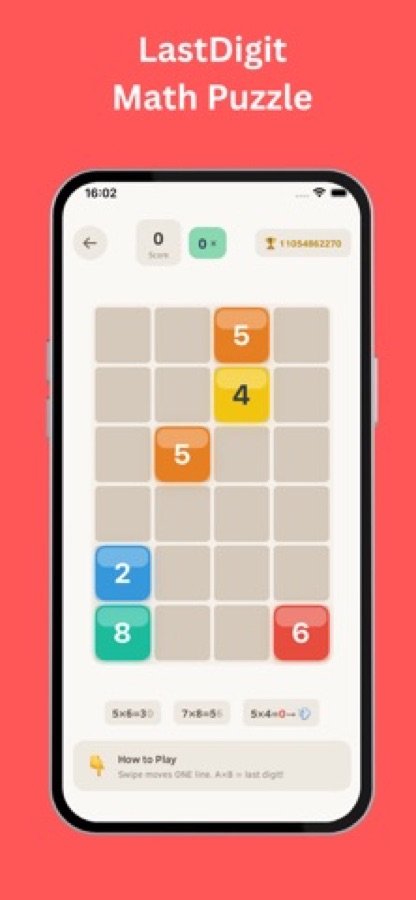
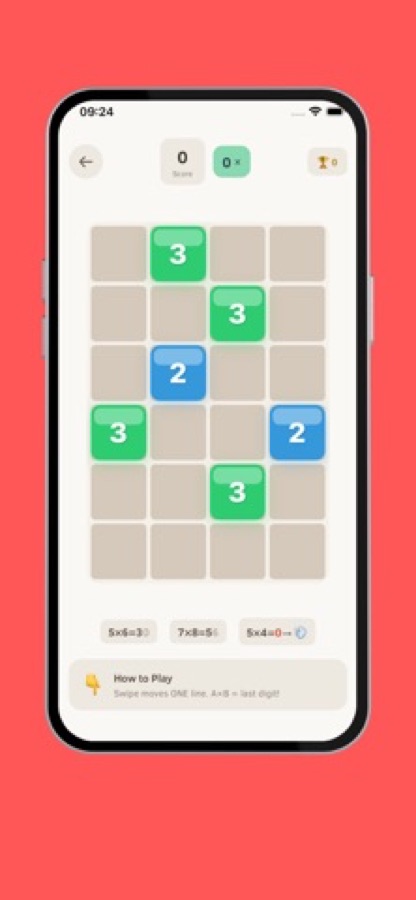
Single-digit tiles in different colours sit on an otherwise empty grid. The score and a high score are at the top, and a short reference beneath the board reminds you how a product reduces to a last digit.
One line, nothing else
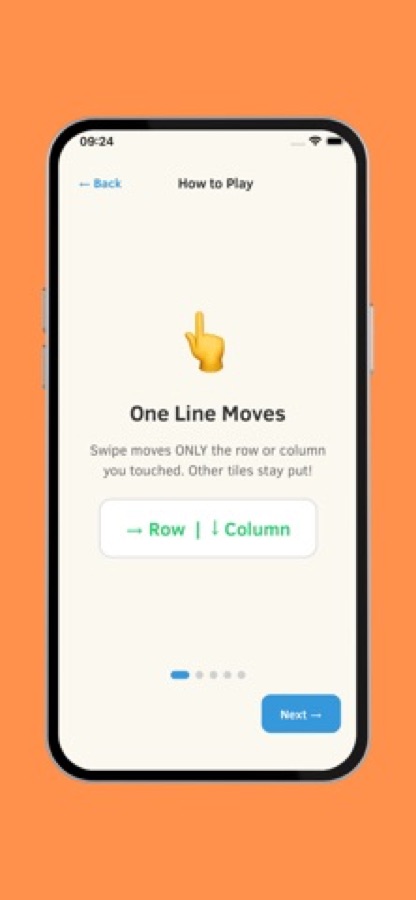
The how-to-play card puts the key rule in one line: a swipe moves only the row or column you touched, and other tiles stay put. That rule is what makes the game a puzzle of choices rather than a reaction test.
Plan the collision
With only a few tiles left on the board, every swipe matters. You choose which row or column to move so that the tiles you want to combine meet, and the product's last digit becomes your next tile.
Quick to start
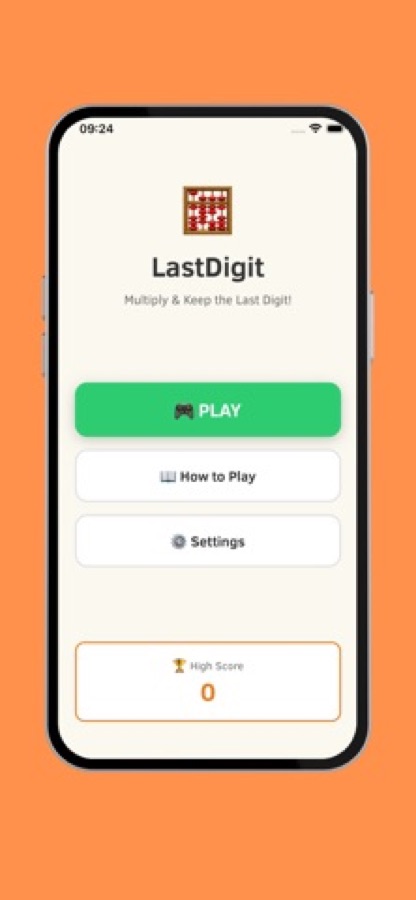
The menu has Play, How to Play and Settings and nothing else in the way, so a session can begin within a tap and your high score sits where you can see it.
How it works
How a round plays
The rules fit in one screen, and a short how-to-play walkthrough in the app covers them step by step.
Swipe one line
Swipe left or right to move a single row, or up or down to move a single column. Only the line you touched moves, and every other tile stays put.
Let tiles collide
When tiles meet, they multiply and the board keeps only the last digit of the result, so 7 times 8 leaves a 6. The score and a high score sit at the top of the screen.
Plan the next swipe
Look ahead before you move, because a poor collision can leave you with tiles that no longer combine. The game keeps going with a rising challenge, so a session can be a quick break or a long think.
Background
What is a last-digit puzzle, and what maths is hiding in it?
The last digit of a number is what is left after you divide by ten, so keeping only that digit means working in a small world where every product wraps back into 0 to 9. That makes the multiplication table behave differently from ordinary arithmetic, because some digits trap you and others keep your options open. Spotting those patterns is the real skill, and it is the kind of number sense that carries over to mental arithmetic.
The units digitwhat stays on the board
Only the units digit of a product matters, so 7 times 8 gives 56 and the board keeps a 6. You can ignore every other digit, which turns each collision into a quick lookup in the last-digit multiplication table.
Zero as a trap5 and even numbers
Any tile that ends in 5 multiplied by an even tile ends in 0, and zero multiplied by anything stays zero. Learning which pairings produce a zero tells you which collisions to avoid or to seek out on purpose.
Why one line at a timeprecision over speed
Moving the whole grid at once lets chain reactions play out for you. Moving a single row or column gives control over exactly which tiles meet, so mistakes are your own and a clever plan is rewarded.
Thinking a move aheadavoiding dead ends
A board can lock up when the remaining tiles cannot be combined into anything useful. Looking one or two swipes ahead at what a collision will leave behind is the habit that keeps a run going.
What's inside
What is in the game
1
One line per move
Each swipe moves a single row or column, giving you precise control over exactly which tiles collide.
×
Multiply, don't add
Tiles multiply on contact and only the last digit survives, which is a different feel from games where numbers add up or double.
0
No luck-based play
The game states it uses no power-of-two mechanics and no luck, so results come from your own decisions.
Clean
A calm, minimal design
Soft-coloured number tiles on a pale board, with a short reference under the grid showing how products reduce to a last digit.
∞
Endless, with rising challenge
Play for a few minutes or settle in for a long run. A score and a high score record how far you got.
Help
A built-in how-to-play
A short walkthrough explains that a swipe moves only the line you touched, so the first game is not a guessing exercise.
Fit
Who it's for — and who it isn't
A good fit if you
- Enjoy number puzzles and want a different rule set from the usual adding or doubling games
- Like planning a few moves ahead more than fast reflexes
- Want a quiet puzzle for a short break or a long think
- Want a little extra practice with times tables disguised as a game
- Prefer a minimal design without clutter
Not the right tool if you
- Use an Android phone — the game is on the App Store only
- Want a game with a story, characters or multiplayer
- Want a luck-driven game with random bonuses
- Dislike multiplication, since every collision is a product
Questions
Frequently asked questions
What is LastDigit: Math Puzzle?
LastDigit: Math Puzzle is a free iOS number puzzle where you swipe one row or column at a time and tiles that collide multiply, keeping only the last digit of the result. It is meant to feel different from puzzles where numbers add up, and it is played for the best score you can reach.
How do you play LastDigit?
Swipe left or right to move a single row, or up or down to move a single column. Only that line moves while the rest of the board stays still. When tiles collide, they multiply and the board keeps just the last digit of the product, so 7 times 8 leaves a 6.
How is it different from 2048-style games?
LastDigit says it uses no power-of-two mechanics and no global board movement. Instead of sliding the whole grid and combining equal numbers, you move one line and multiply whatever meets. The game also states that it has no luck-based gameplay, so outcomes follow from your planning.
Do I need to be good at maths?
Basic multiplication is enough to start, since the game only needs the last digit of each product. A short reference under the board shows how products reduce, and the more you play the more you recognise patterns, such as which pairings end in zero.
Does the game end?
It is described as endless gameplay with increasing challenge, so you play for a score rather than to finish a set of levels. Your best result is kept as a high score on the board and the main menu.
Is there a tutorial?
Yes. The menu has a How to Play section with a short walkthrough, and the first card explains that a swipe moves only the row or column you touched. A small how-to-play hint also stays under the board during a game.
Is LastDigit: Math Puzzle free?
The game is free to download from the App Store and includes optional in-app purchases. It is rated 4+.
Is there an Android version?
No. LastDigit: Math Puzzle is available on iOS through the App Store only, and there is no Android version of the game at the moment.
Get started
Swipe one line and see what multiplies
Free on iOS, with optional in-app purchases.
More from CoddyKit
Available on iOS.