Lifestyle · Free · iOS & Android
By CoddyKit
Beekeeping Log: a hive inspection tracker and apiary log
Beekeeping Log is a free hive inspection log for keepers who work their hives every week. Record queen status, brood pattern, temperament, and varroa counts hive by hive, track honey harvests and treatments on an apiary calendar, and ask a hive advisor plain-English questions mid-season.
- Price
- Free
- Platforms
- iOS and Android
- Age rating
- 4+
- Version
- 1.6.0
The notebook in your bee suit pocket.
Scattered notes across a season answer nothing next spring. The same ten minutes at each hive, logged instead of remembered, becomes a per-hive history: which colony swarmed, which one you treated, which one produced.
What it is
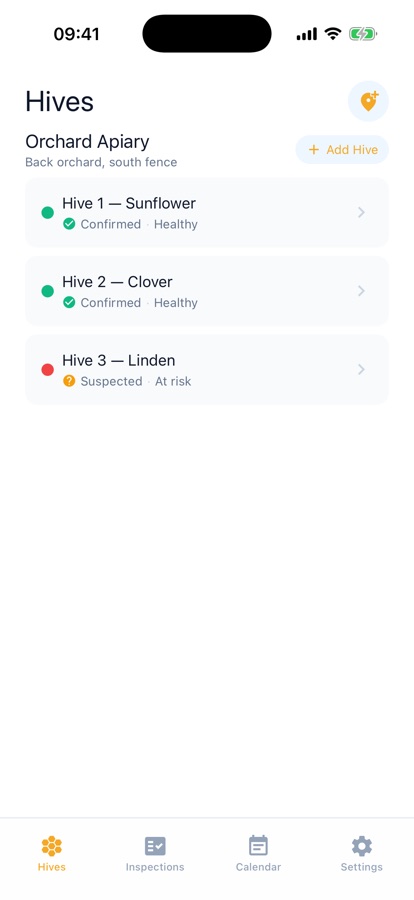
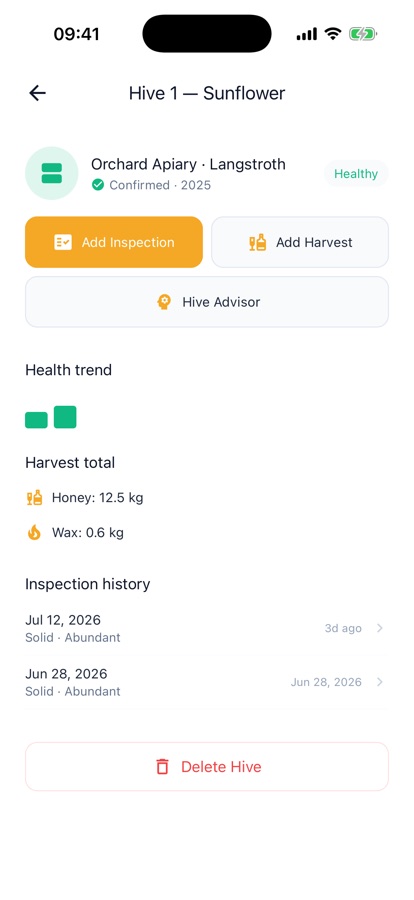
Beekeeping Log is a free iOS and Android app for recording hive inspections and managing an apiary. You log queen sightings, brood pattern, temperament, and varroa counts for each hive, record honey, wax, propolis, and pollen harvests, and track varroa treatments with a honey-safe date. An apiary calendar shows past and upcoming inspections, treatments, and harvests, and a built-in advisor answers beekeeping questions based on what you have logged.
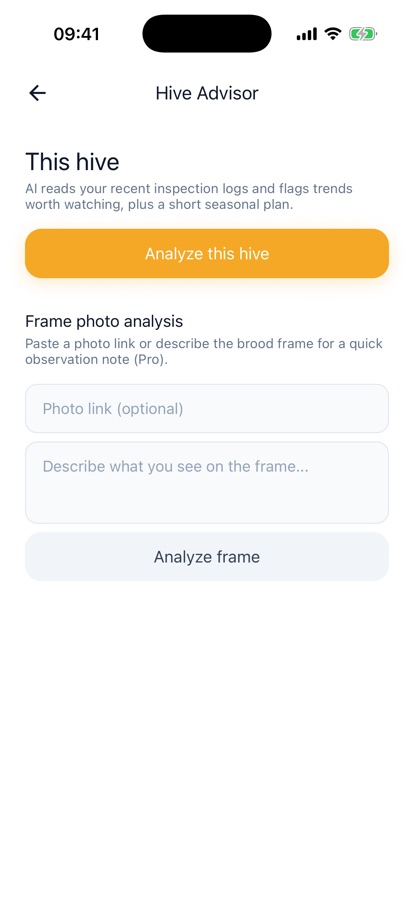
The advisor gives general beekeeping guidance from your own records. It does not diagnose colony disease — see Records, not a diagnosis.
Background
What does a hive inspection actually involve?
An inspection is a short, structured look for four things: is the colony queenright, is there room, are there stores, and is anything wrong. You check for eggs and a solid brood pattern, look along frame bottoms for queen cells, judge how full the boxes are, and note temperament. Most of it is answered in a few frames rather than by pulling the whole box apart.
Queenrighteggs within about 3 days
A colony with a laying queen. You do not have to see her: eggs standing upright in cell bottoms were laid within about three days, which is usually evidence enough.
Brood patternsolid versus spotty
How evenly capped brood fills a frame. A solid slab with few gaps suggests a queen laying well; a scattered, spotty pattern can point to a failing queen, disease, or poor conditions, and is worth a second look.
Varroa washmites per 100 bees
A mite count taken by shaking about half a cup of nurse bees, roughly 300, in alcohol or powdered sugar. Counting mites per hundred bees is the only reliable way to know your load.
Swarm cellsalong frame bottoms
Queen cells built on the lower edges of frames, usually several at once, signalling a colony preparing to swarm. Cells in the middle of a frame instead often mean supersedure, where the colony is replacing a failing queen.
How it works
How the app is used
The part you repeat is the inspection. Everything else — the calendar, the harvest charts, the honey-safe dates, the advisor's answers — is built from those entries, so the setup happens once and the habit at the hive stays short.
Set up the apiary
Add each hive and the yard it stands in, pinned on the apiary map with a hive count per location. Starting a record for a new package, a nuc, or a split takes seconds, and you can set a repeating inspection reminder on whatever interval suits your season.
Log the inspection at the hive
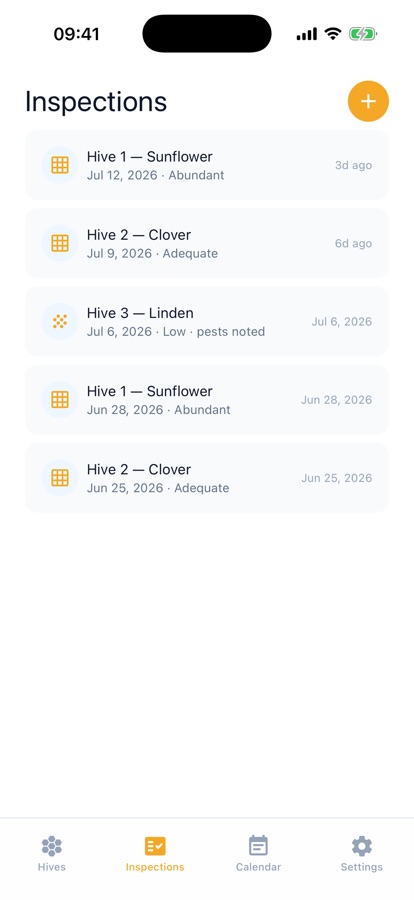
Record what you saw while the box is still open: queen sighting, brood pattern, temperament, varroa count, swarm risk. Treatments and feedings go in the same record, so a varroa treatment carries its honey-safe date and a syrup or fondant feed is dated per hive.
Work the season from the calendar
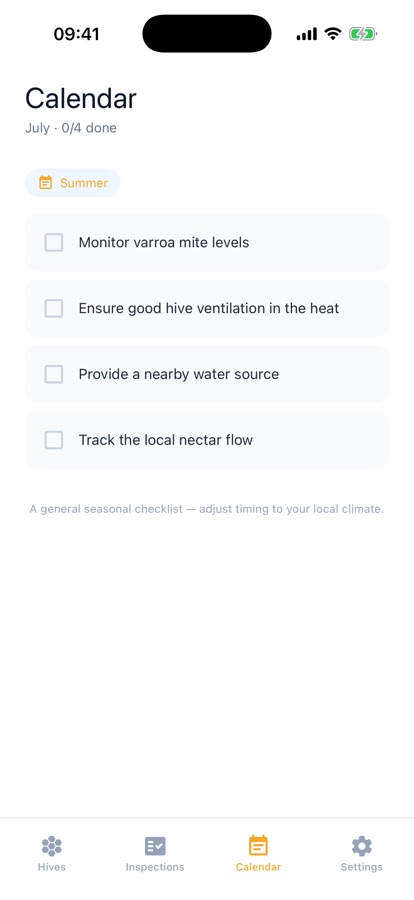
The apiary calendar lays out past and upcoming inspections, treatments, and harvests so nothing overlaps or gets missed, and each yard shows a good-day-to-inspect verdict with a three-day forecast. Harvest analytics turn the season into monthly and year-over-year totals per hive.
What’s inside
What the app tracks
/hive
Hive inspections
Queen sightings, brood pattern, temperament, and varroa counts logged per hive, with swarm risk, queen introductions, and requeening history kept on the same record.
5
Treatment log
Record Apivar, oxalic acid, formic acid, thymol, or amitraz treatments and see a honey-safe date, so supers stay off until harvest is safe again.
4
Harvest tracking
Every harvest recorded by hive, with monthly and year-over-year trend charts and totals by product: honey, wax, propolis, and pollen.
3-day
Weather-aware checks
A good-day-to-inspect verdict and a three-day forecast for each apiary, based on temperature, wind, and rain, so you plan the week around the weather.
Cal
Apiary calendar
Upcoming and past inspections, treatments, and harvests at a glance, plus a repeating inspection reminder on the interval you pick so a busy week costs you nothing.
Ask
Hive advisor
Ask a beekeeping question in plain English and get guidance shaped by your setup and the season, drawn from what you have actually logged rather than a generic tip list.
Inside the app
What it looks like
Fit
Who it’s for — and who it isn’t
A good fit if you
- Keep one or two hives in the garden and want an inspection log that takes seconds
- Run several hives, or several yards, that each need their own history
- Are new to bees and want plain-English guidance on queen status, brood pattern, and varroa
- Treat for varroa and need to know when supers can safely go back on
- Want an honest honey yield per hive instead of an end-of-season estimate
Not the right tool if you
- Need to know what is wrong with a sick colony — brood disease is a job for a mentor, a local association, or a bee inspector
- Expect useful trends on day one: harvest charts and season history come from your own accumulated entries
- Would rather keep records on a computer than on the phone you carry to the apiary
- Run a commercial operation needing sales invoicing or queen-rearing paperwork rather than an inspection log
Safety and limits
Records, not a diagnosis
Beekeeping Log is a record-keeping app. The advisor answers general beekeeping questions based on what you have logged — when to add a super, what a spotty brood pattern might mean, how the season is shaping up — and it gives guidance only. It does not diagnose or treat colony disease, and it is not a substitute for hands-on mentorship.
If a colony is failing, if brood looks or smells wrong, or if you suspect a notifiable disease or pest such as American foulbrood or small hive beetle, contact your local beekeeping association or bee inspector. Reporting duties, approved varroa treatments, and honey withdrawal periods are set by law where you live, so follow your national or regional guidance rather than a general figure.
Questions
Frequently asked questions
What's the best app for logging hive inspections?
The one you will actually use with gloves on. A hive log has to be quick while the box is open, keep every colony separate, and hold the things you cannot carry in your head — varroa counts, treatment dates, queen changes. Beekeeping Log is built that way: per-hive inspections covering queen status, brood pattern, temperament and mite counts, a treatment log with a honey-safe date, harvest totals by hive, and an apiary calendar. Free on iOS and Android.
How often should you inspect a beehive?
Through the swarm season in spring and early summer, many keepers open a colony every seven to ten days, because that is roughly how long a colony needs to go from a fresh queen cell to a swarm. Outside that window, every two to three weeks is common, and in cold or wet weather you leave the hive shut. Cadence genuinely varies with climate, colony temperament, and what you are watching for.
What do you look for in a hive inspection?
Four questions cover most of it: is the colony queenright, does it have room, does it have stores, and is anything wrong. In practice that means eggs and a solid capped-brood pattern, queen cells along frame bottoms, how much of the box is drawn and filled, sealed honey and pollen, pests, and temperament. Write down what you saw with the date — one inspection means little, a season of them means a lot.
How do you know if a colony is queenright?
You rarely need to see the queen herself. Eggs standing upright in the bottom of cells were laid within about three days, which tells you a queen was laying this week. A solid slab of capped brood across the frame says she has been laying well for longer than that. A colony that is loud and restless, building queen cells, with no eggs anywhere, is the classic sign something has gone wrong.
What are the signs a colony is about to swarm?
The strongest signal is charged queen cells — cups holding an egg or a larva in royal jelly — usually hanging along the bottom edges of frames in spring. Alongside them you often see a congested brood nest, cells backfilled with nectar, a queen slimming down and laying less, and plenty of drones. Bearding on a hot evening on its own is not swarming. Adding space early, or making a split, is the usual response.
How do you check varroa levels, and when should you treat?
Monitor with a count, not a guess: shake roughly half a cup of nurse bees, about 300, in alcohol or powdered sugar, and count mites per hundred bees. Many keepers check monthly through the season and again in late summer, before the winter bees are reared, because that brood is what carries the colony through. Thresholds, approved products, and treatment windows vary by country and climate — follow your national or local guidance.
When should you add a super?
A common rule of thumb is to add a super once about seven of the ten frames in the top box are drawn out and covered in bees, and a nectar flow is on. Bees need the space before they look like they need it, so supering late can push a colony toward swarming. If you have recently treated for varroa, check the product's honey-safe date before any super goes back on.
How do you get a colony through winter?
Winter is mostly decided in late summer: low mite loads, a young laying queen, and enough stores. How much store counts as enough depends entirely on climate — a long cold winter can need several times what a mild one does, so take the figure from a local association rather than a general one. Keep the hive dry and ventilated, give it a wind break and a mouse guard, and heft it rather than opening it in the cold.
Is Beekeeping Log free, and what platforms does it run on?
Yes, Beekeeping Log is free to download on the App Store and Google Play. The current version is 1.6.0 and the content rating is 4+. It covers hive inspections, multiple hives and apiaries, varroa treatments with withdrawal tracking, feeding, honey harvests and analytics, an apiary calendar, inspection reminders, and a hive advisor you can ask questions in plain English.
Can I track several hives, and what does the app not do?
Each hive keeps its own inspection, treatment, feeding, and harvest history, and multiple yards can be pinned on an apiary map with a live hive count at each location. Starting a record for a new package, nuc, or split takes seconds. What the app does not do is diagnose disease — the advisor gives general guidance from what you have logged, and serious colony problems belong with a mentor, a local association, or a bee inspector.
Start logging
Give every hive the record it deserves
Free on iOS and Android — inspections, treatments, harvests, and a season-long apiary calendar.
More from CoddyKit
Not a medical device. Does not diagnose or treat any condition.