
map & filter — essentials
Transform and select data with map and filter; chain them and avoid mutation for safer code.
map & filter — essentials is a free JavaScript Academy lesson on CoddyKit. This is lesson 1 of 2. Any 3 lessons of this learning path are free to read in full — after that, CoddyKit PRO unlocks every lesson, plus hands-on practice with a built-in code editor and a 24/7 AI tutor. It is part of the JavaScript Academy learning path, and your progress syncs across the web and the CoddyKit app. The JavaScript Academy course includes 2 lessons in total.
Intro to map & filter
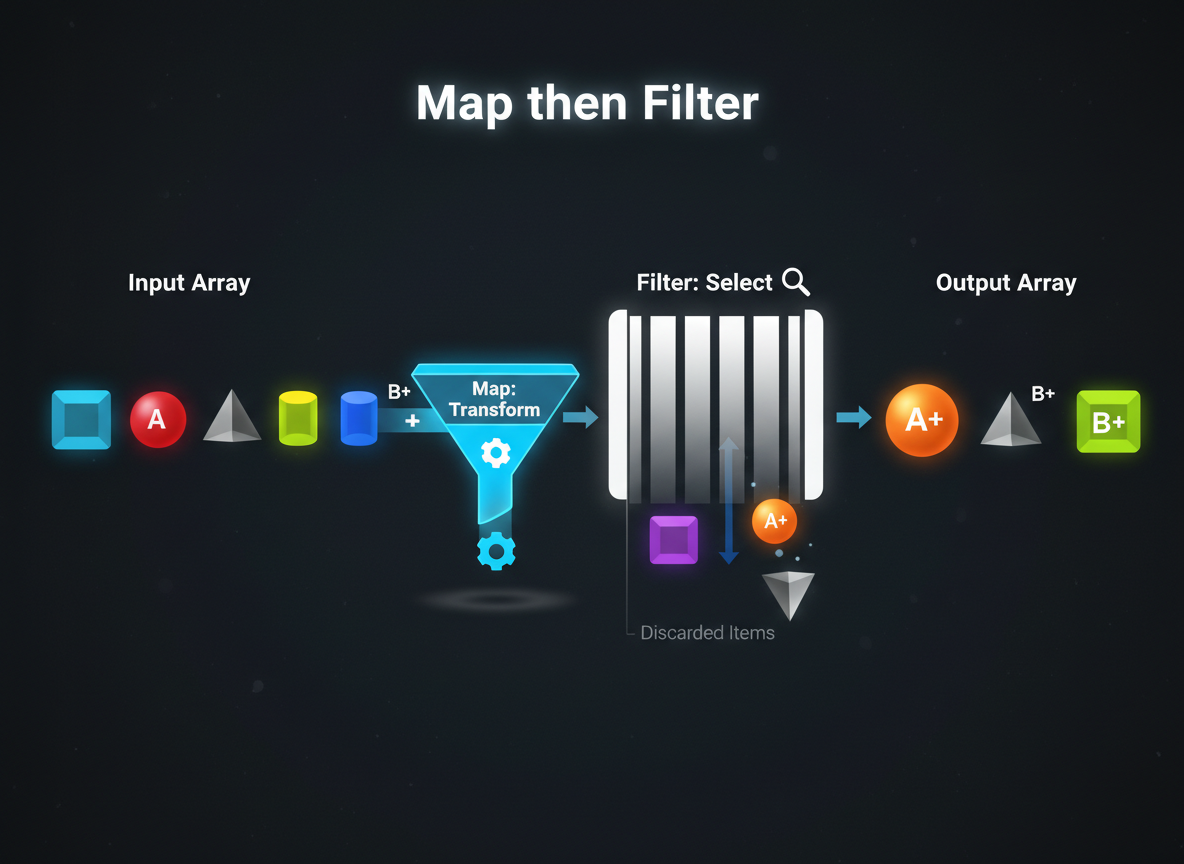
Goal: Transform items with map and pick items with filter.
- map: transform
- filter: select
- Chain map → filter
- No mutation
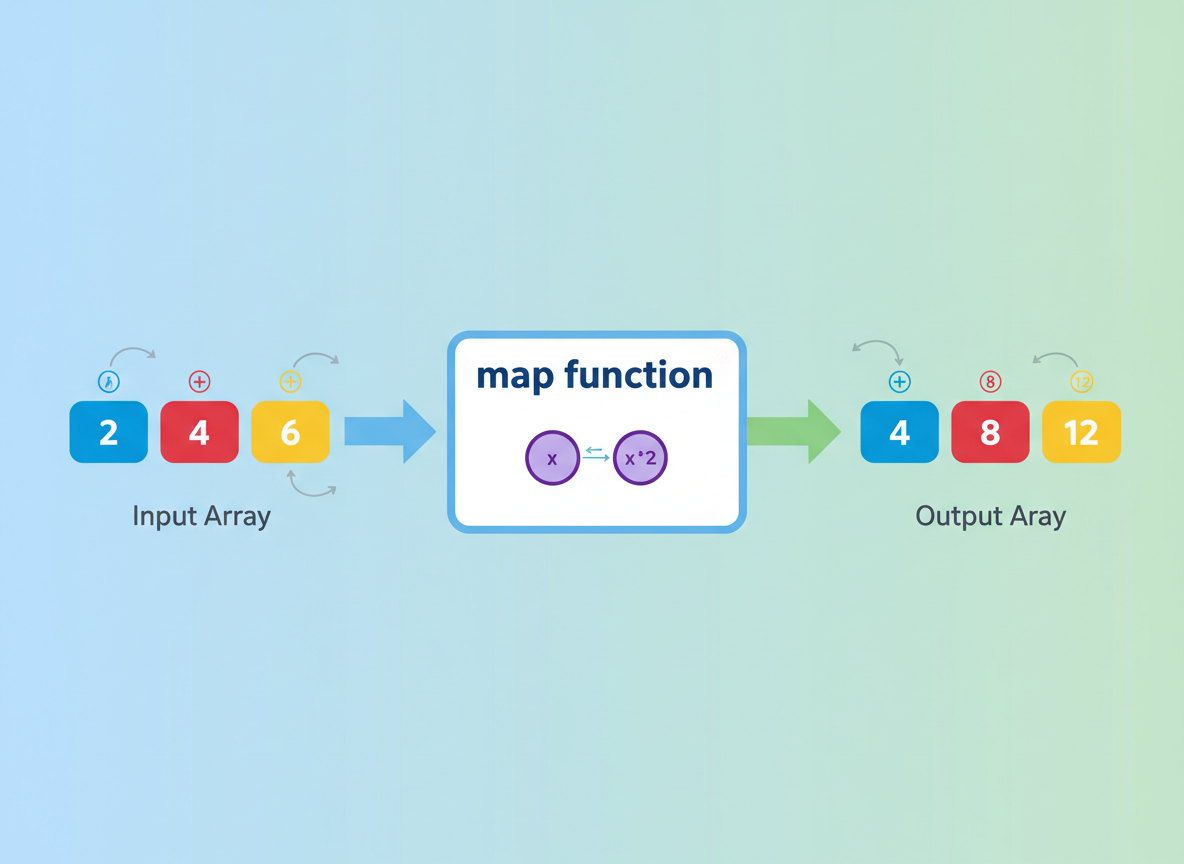
map basics
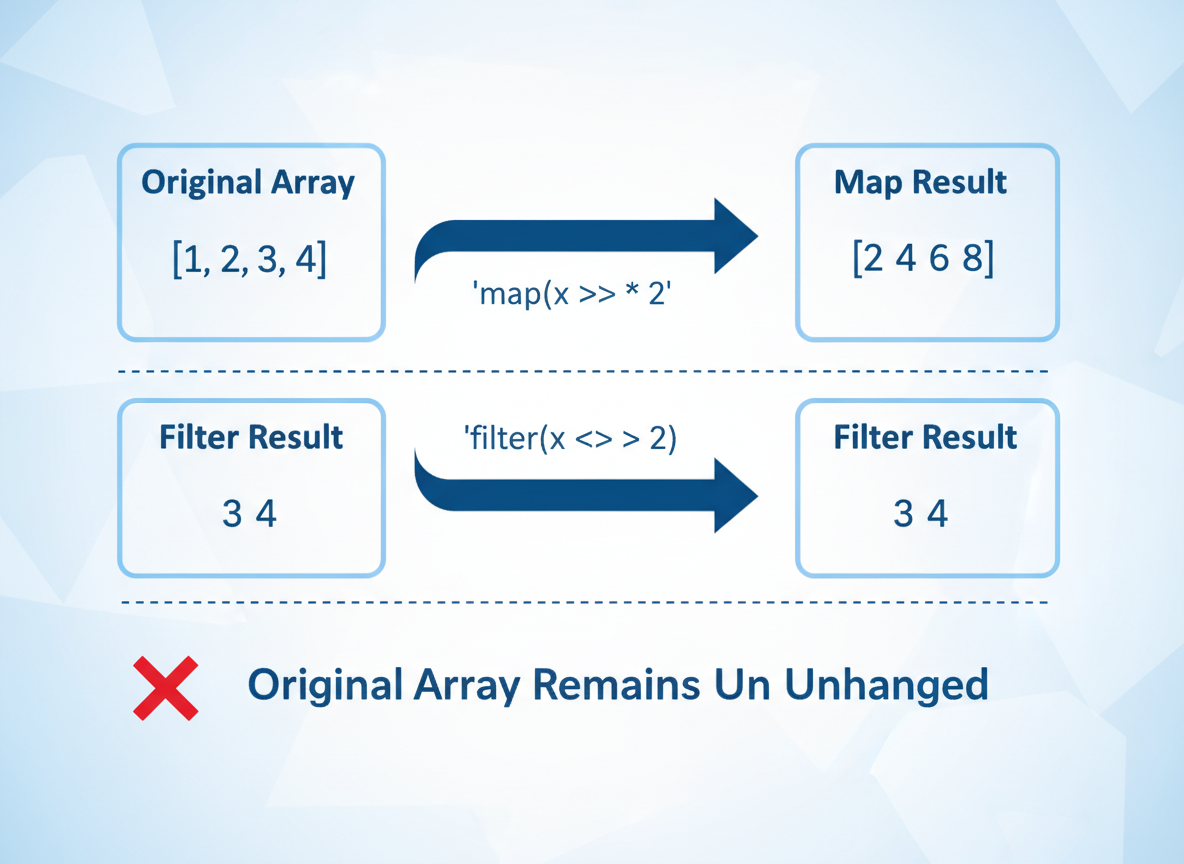
map applies a function to every element and returns a new array (same length).
// map transforms each value and returns a new array
const nums = [1, 2, 3];

const doubled = nums.map(function (n) {
  return n * 2;
});

console.log("nums:", nums);
console.log("doubled:", doubled);
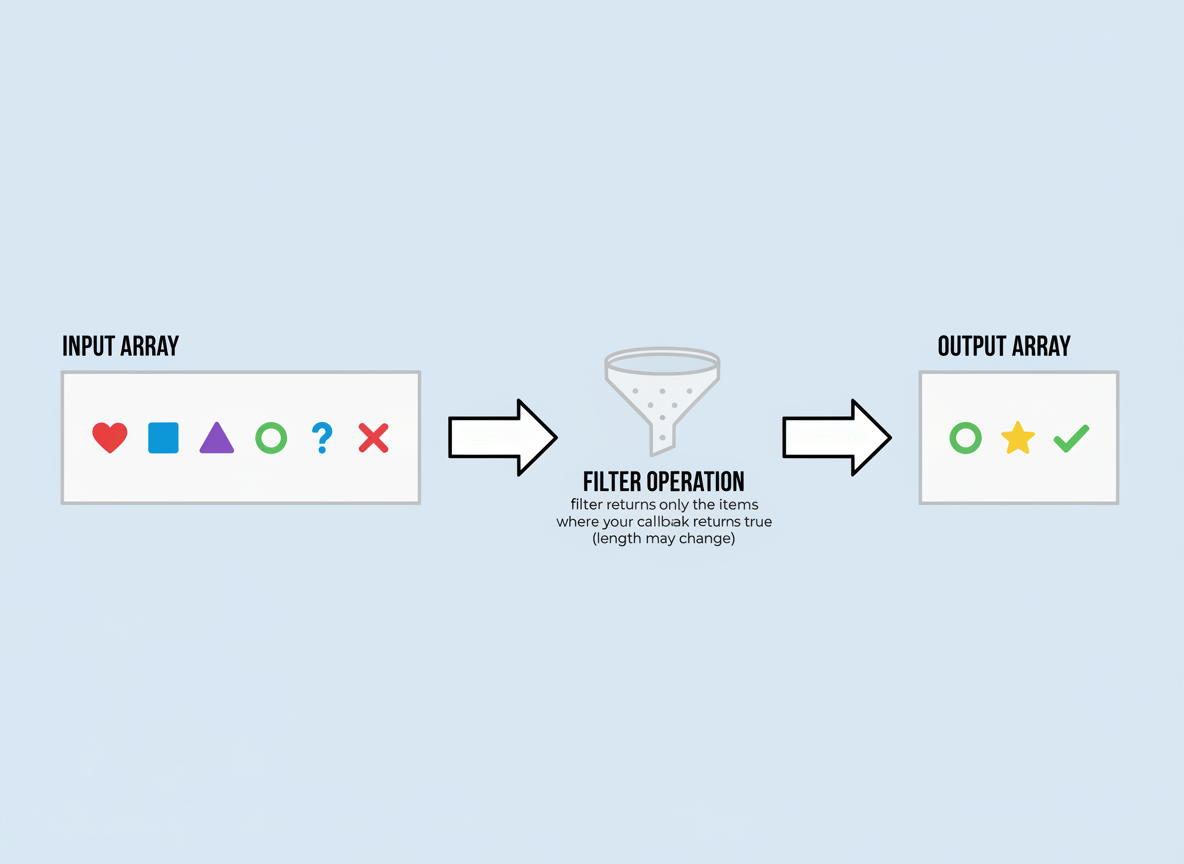
filter basics
filter returns only the items where your callback returns true (length may change).
// filter keeps values that pass the test
const values = [1, 2, 3, 4, 5];

const evens = values.filter(function (n) {
  return n % 2 === 0;
});

console.log("values:", values);
console.log("evens:", evens);
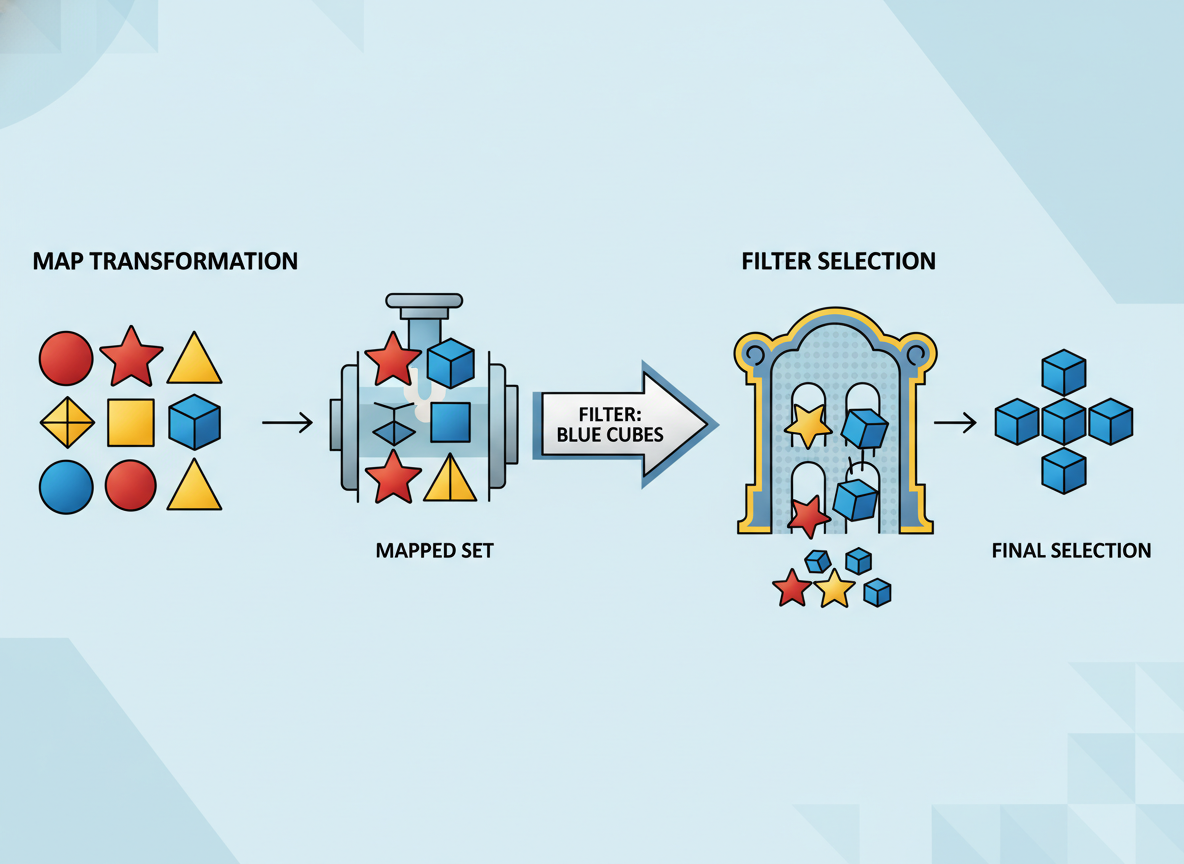
Chaining example
Combine steps: map to transform, then filter to select.
// Chain methods for clarity
const prices = [4, 7, 10];

// First add tax, then keep items over 8
const withTax = prices.map(function (p) {
  return p * 1.1;
});

const expensive = withTax.filter(function (p) {
  return p > 8;
});

console.log("withTax:", withTax);
console.log("expensive:", expensive);
No mutation demo
Immutability: map/filter return new arrays; the original is unchanged.
// map and filter do not mutate the original array
const base = [2, 4, 6];

const plusOne = base.map(function (n) {
  return n + 1;
});

const small = base.filter(function (n) {
  return n < 5;
});

console.log("base:", base);
console.log("plusOne:", plusOne);
console.log("small:", small);
Tips for clean arrays
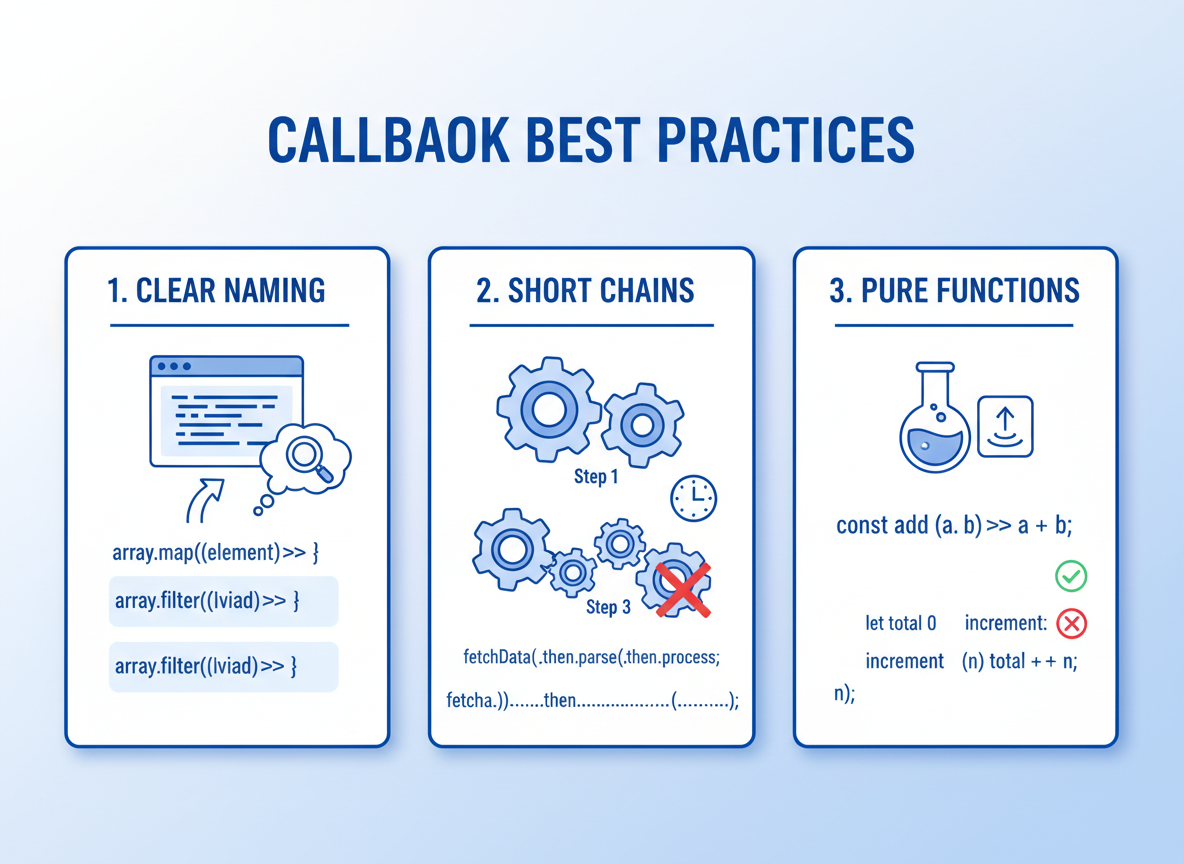
Tips:
- Name small callbacks well (n, item) for clarity.
- Keep chains short (2–3 steps max).
- Prefer pure callbacks (no side effects).
map vs filter quiz
Quick check: Transform every element.

Recap
Recap: Use map to transform values, filter to select some, and chain them without mutating the original array.


Learn JavaScript with an AI tutor — free
Write and run real code in your browser, get instant help from a 24/7 AI tutor, and pick up where you left off on the web or in the app.
- Courses
- 59
- Lessons
- 200
Frequently Asked Questions
Is the “map & filter — essentials” lesson free?
Yes — any 3 lessons of the JavaScript Academy learning path, including “map & filter — essentials”, are free to read in full here on the web. After that, CoddyKit PRO unlocks every lesson, plus interactive practice with a built-in code editor and a 24/7 AI tutor. The JavaScript Academy course includes 2 lessons in total.
What will I learn in “map & filter — essentials”?
Transform and select data with map and filter; chain them and avoid mutation for safer code. You practise JavaScript Academy with hands-on code you run directly in the browser, and a 24/7 AI tutor answers your questions as you work through the lesson.
Do I need any experience to start JavaScript Academy?
No prior experience is required. JavaScript Academy on CoddyKit is structured for beginners through advanced learners, so you can start here or from the beginning and move at your own pace. This is lesson 1 of 2.
How long does the “map & filter — essentials” lesson take?
Most CoddyKit lessons take about 5–10 minutes. Each one is bite-sized and interactive, so you make steady progress and pick up exactly where you left off across the web and the app.
Can I write and run code in this JavaScript Academy lesson?
Yes. Every JavaScript Academy lesson includes a built-in code editor, so you write and run real code right in your browser and get instant AI feedback — no local setup required.
All lessons in this course
- map & filter — essentials
- reduce, some/every, find — simple patterns