
Early Returns and Guard Clauses
Use early returns and guard clauses to simplify conditions, reduce nesting, and make the happy path clear.
Early Returns and Guard Clauses is a free JavaScript Academy lesson on CoddyKit. This is lesson 3 of 3. Any 3 lessons of this learning path are free to read in full — after that, CoddyKit PRO unlocks every lesson, plus hands-on practice with a built-in code editor and a 24/7 AI tutor. It is part of the JavaScript Academy learning path, and your progress syncs across the web and the CoddyKit app. The JavaScript Academy course includes 3 lessons in total.
Intro
Goal: Write clearer functions by returning early for invalid inputs so the happy path stays short.
- Early return
- Guard clause
- Less nesting

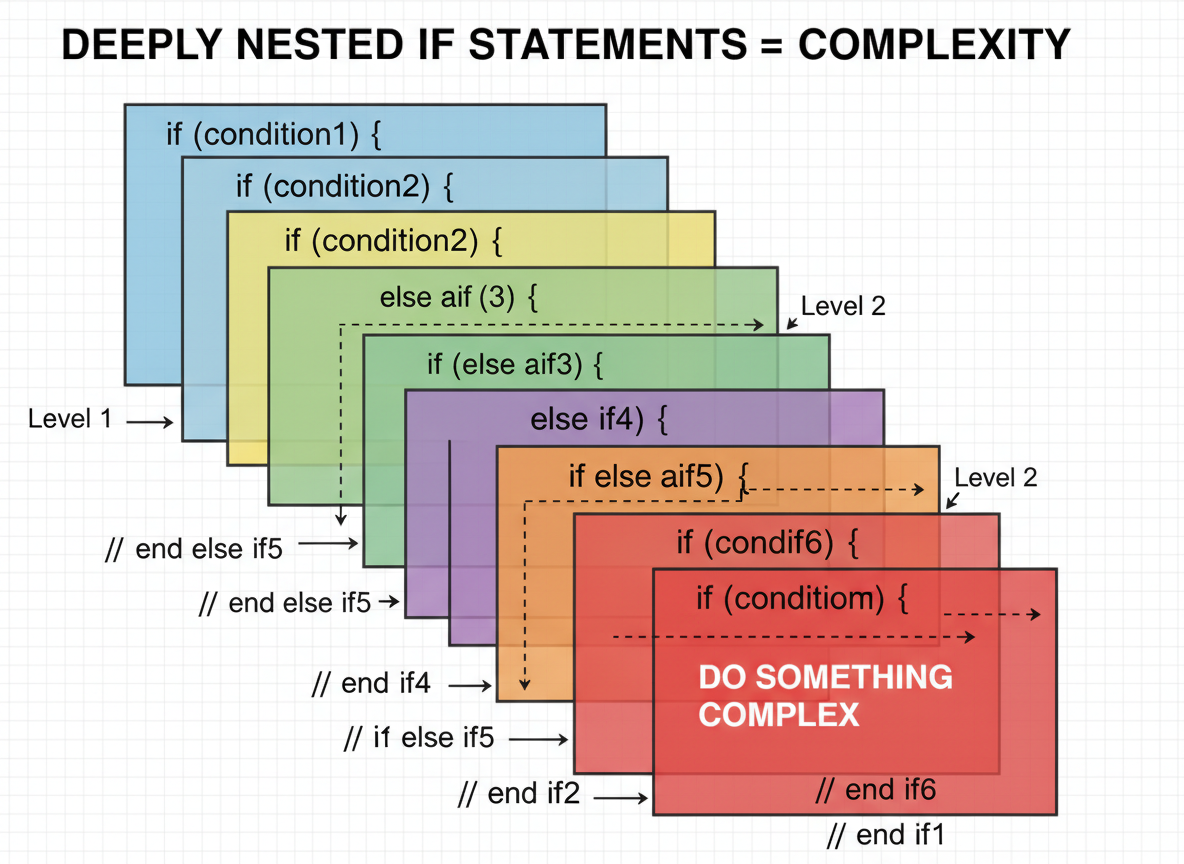
Without guard clause
Nesting pushes the main work inside an if, which can grow hard to read.
// Nested style without guard
function welcome(name) {
  if (name) {
    const message = "Hello, " + name + "!";
    console.log(message);
  } else {
    console.log("Name required");
  }
}

welcome("Ayla");
welcome("");
Guard clause refactor
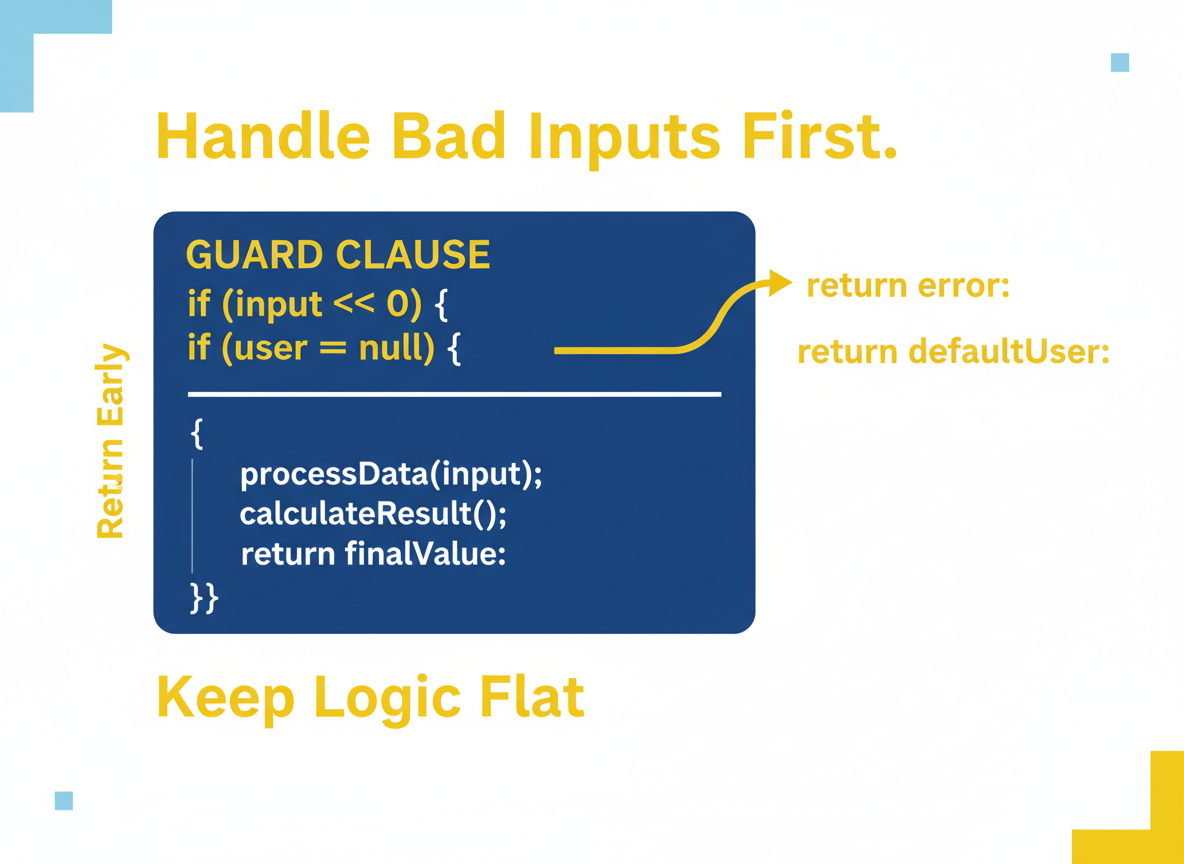
Handle invalid input first, then write the happy path with fewer indents.
// Guard clause: return early for bad input
function welcomeSafe(name) {
  if (!name) {
    console.log("Name required");
    return;
  }
  const message = "Hello, " + name + "!";
  console.log(message);
}

welcomeSafe("Ayla");
welcomeSafe("");

Multiple guard clauses
Use one small guard per rule. Each early return removes the need for deep nesting.
// Multiple guard clauses keep each rule small
function divide(a, b) {
  if (typeof a !== "number" || typeof b !== "number") {
    console.log("Numbers only");
    return;
  }
  if (b === 0) {
    console.log("Cannot divide by zero");
    return;
  }
  const result = a / b;
  console.log("Result:", result);
}

divide(6, 3);
divide(6, 0);
divide("6", 3);
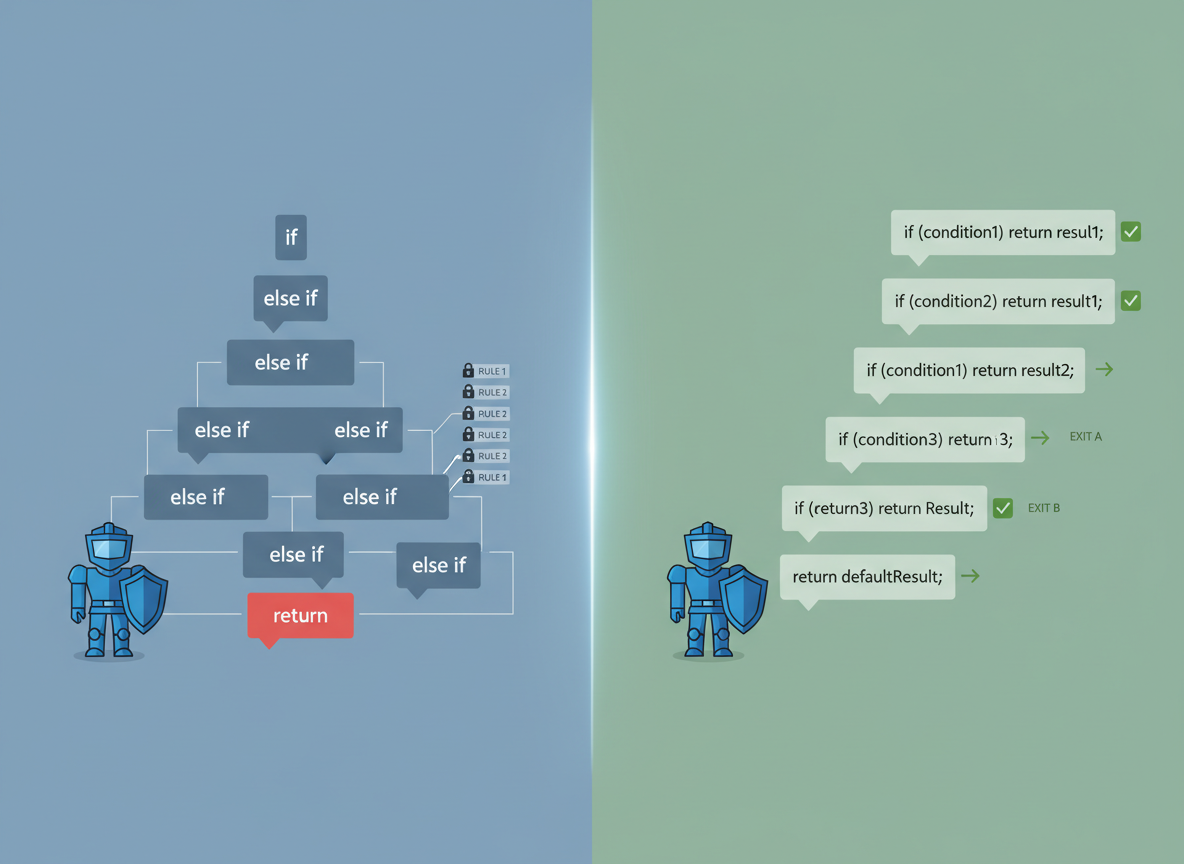
Less nesting with returns
Return early for failure cases; the final line returns success clearly.
// Early returns reduce else blocks
function canVote(age) {
  if (typeof age !== "number") {
    return false;
  }
  if (age < 18) {
    return false;
  }
  return true;
}

console.log(canVote(20));
console.log(canVote(15));
console.log(canVote("20"));

Guard clause tips
Checklist:
- Validate inputs first.
- Return early on errors or edge cases.
- Keep each guard short and specific.
- Write the happy path last and flat.

Guard clause quiz
Quick check: What is a guard clause?

Recap
Recap: Use guard clauses to handle bad inputs first, return early, and keep your main logic flat and readable.

Learn JavaScript with an AI tutor — free
Write and run real code in your browser, get instant help from a 24/7 AI tutor, and pick up where you left off on the web or in the app.
- Courses
- 59
- Lessons
- 200
Frequently Asked Questions
Is the “Early Returns and Guard Clauses” lesson free?
Yes — any 3 lessons of the JavaScript Academy learning path, including “Early Returns and Guard Clauses”, are free to read in full here on the web. After that, CoddyKit PRO unlocks every lesson, plus interactive practice with a built-in code editor and a 24/7 AI tutor. The JavaScript Academy course includes 3 lessons in total.
What will I learn in “Early Returns and Guard Clauses”?
Use early returns and guard clauses to simplify conditions, reduce nesting, and make the happy path clear. You practise JavaScript Academy with hands-on code you run directly in the browser, and a 24/7 AI tutor answers your questions as you work through the lesson.
Do I need any experience to start JavaScript Academy?
No prior experience is required. JavaScript Academy on CoddyKit is structured for beginners through advanced learners, so you can start here or from the beginning and move at your own pace. This is lesson 3 of 3.
How long does the “Early Returns and Guard Clauses” lesson take?
Most CoddyKit lessons take about 5–10 minutes. Each one is bite-sized and interactive, so you make steady progress and pick up exactly where you left off across the web and the app.
Can I write and run code in this JavaScript Academy lesson?
Yes. Every JavaScript Academy lesson includes a built-in code editor, so you write and run real code right in your browser and get instant AI feedback — no local setup required.
All lessons in this course
- if/else and switch — core patterns
- Loops: for, while, do…while, for…of vs for…in
- Early Returns and Guard Clauses