
Async iterators — for await...of and async generators
Use async generators and for await...of to consume values that arrive over time. Learn Symbol.asyncIterator and simple async pipelines.
Async iterators — for await...of and async generators is a free JavaScript Academy lesson on CoddyKit. This is lesson 3 of 3. Any 3 lessons of this learning path are free to read in full — after that, CoddyKit PRO unlocks every lesson, plus hands-on practice with a built-in code editor and a 24/7 AI tutor. It is part of the JavaScript Academy learning path, and your progress syncs across the web and the CoddyKit app. The JavaScript Academy course includes 3 lessons in total.
Why async iteration?
Goal: Consume values that may come later.
- for await...of loops over async iterables
- async function* creates async generators
- Symbol.asyncIterator marks an object as async-iterable
- Tiny async map example
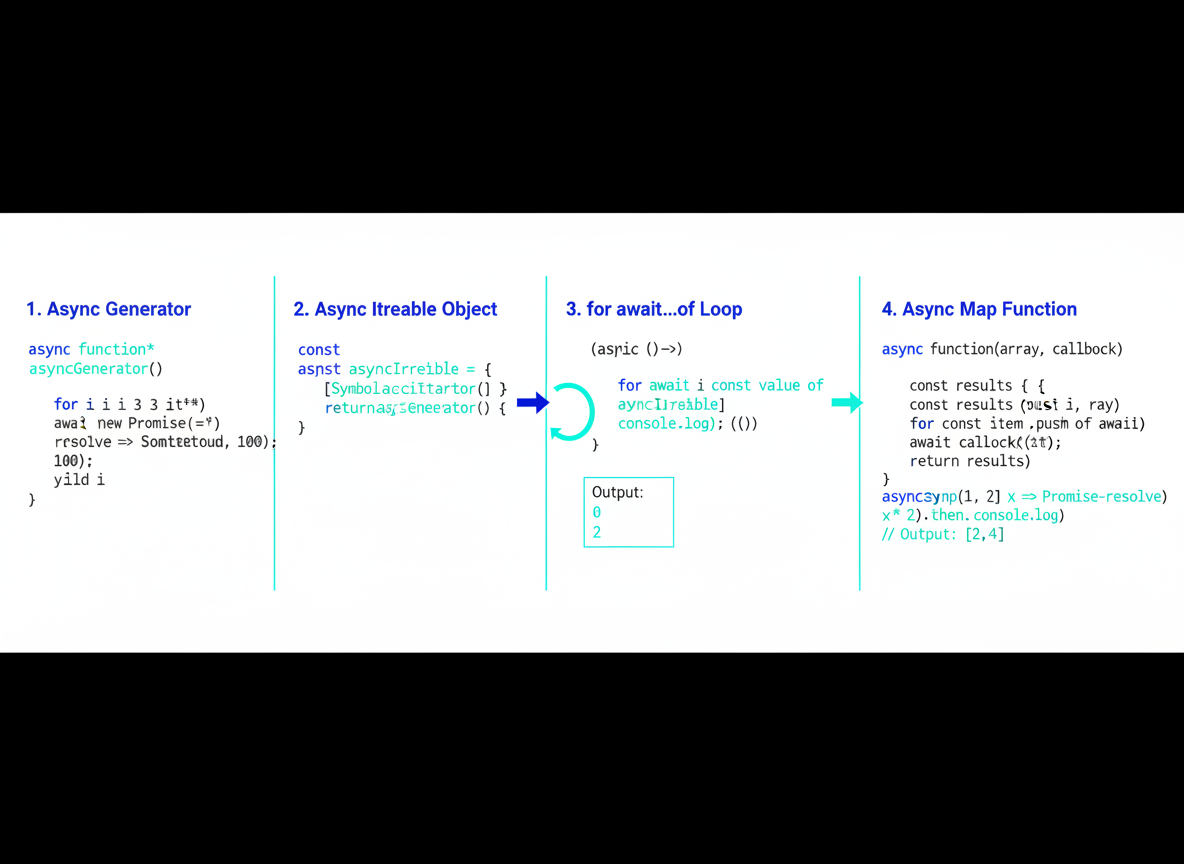
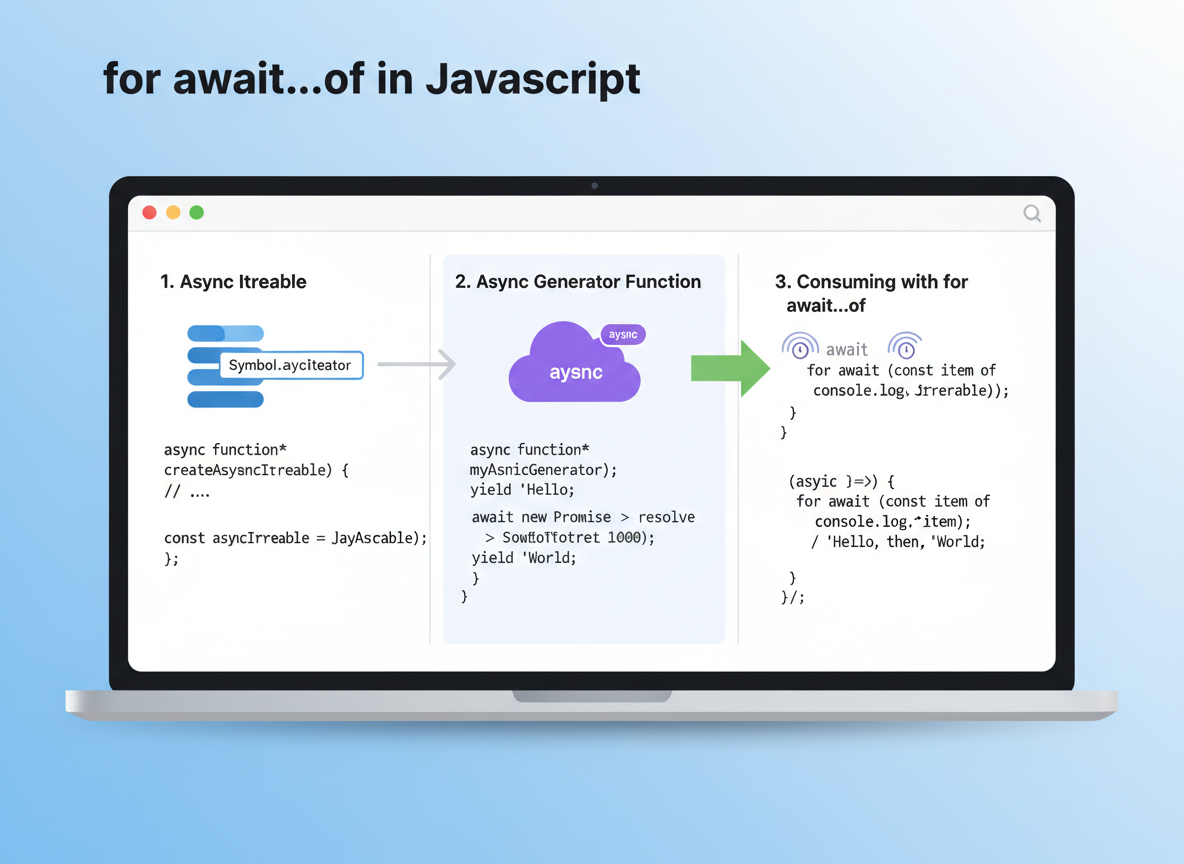
async function* and for await...of
An async generator (async function*) yields values that for await...of consumes.
// Use an async generator to yield values (could be delayed in real apps)
(async function () {
  async function* countAsync(n) {
    for (let i = 1; i <= n; i = i + 1) {
      // In real code you could await a delay or I/O here
      yield i;
    }
  }

  for await (const x of countAsync(3)) {
    console.log("async value:", x);
  }
})();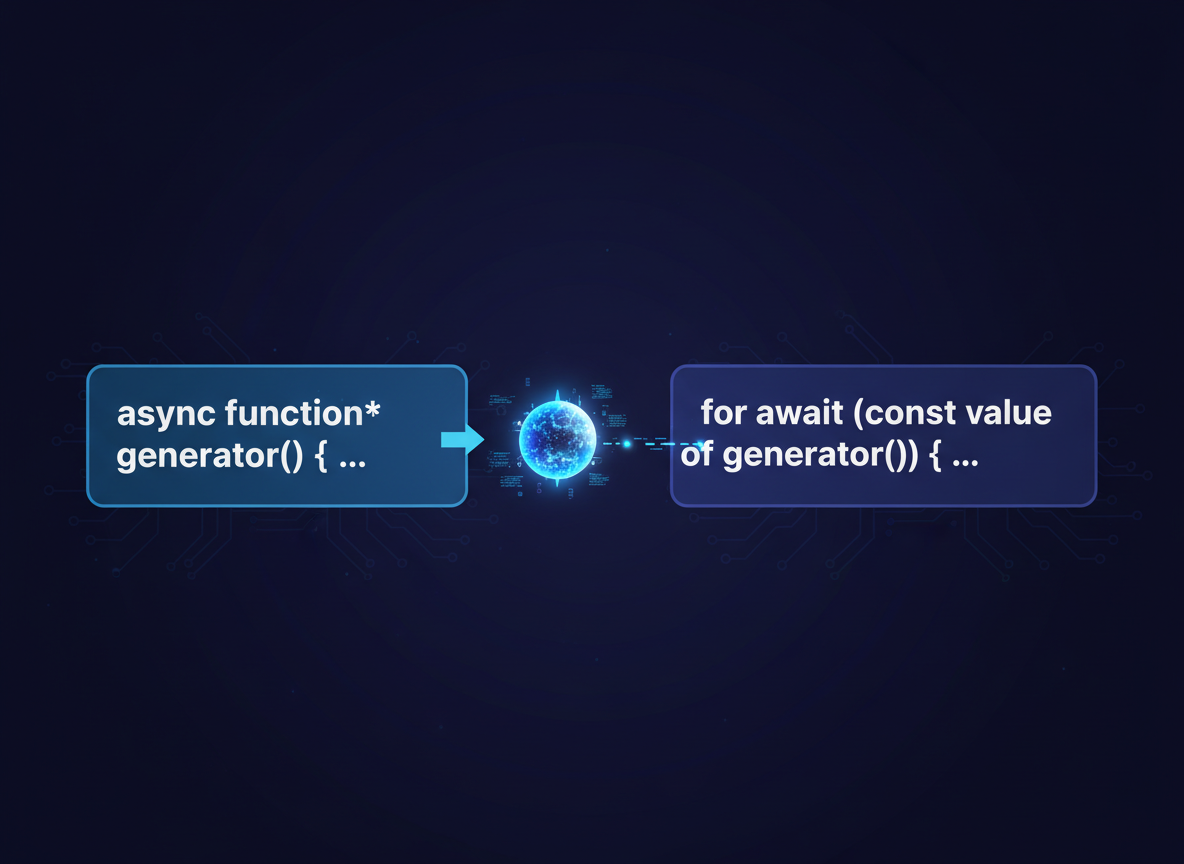
Manual async next()
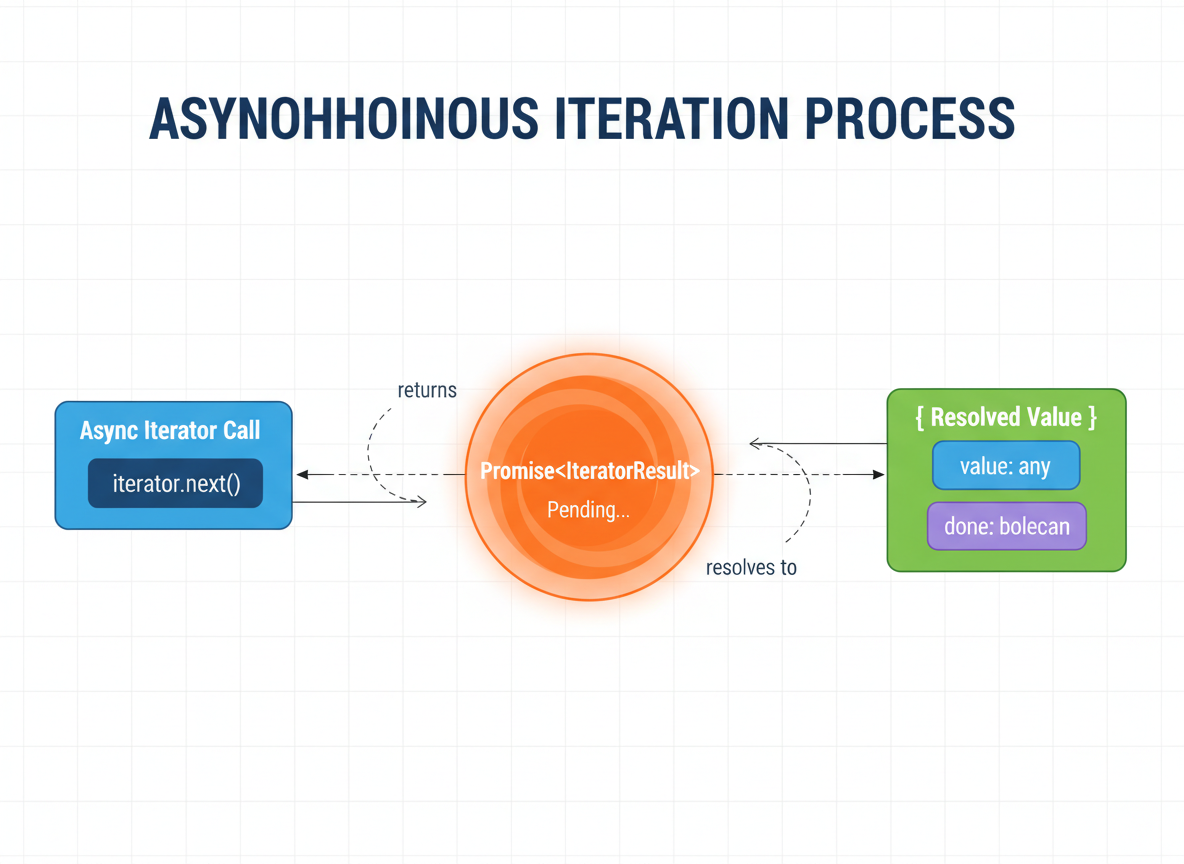
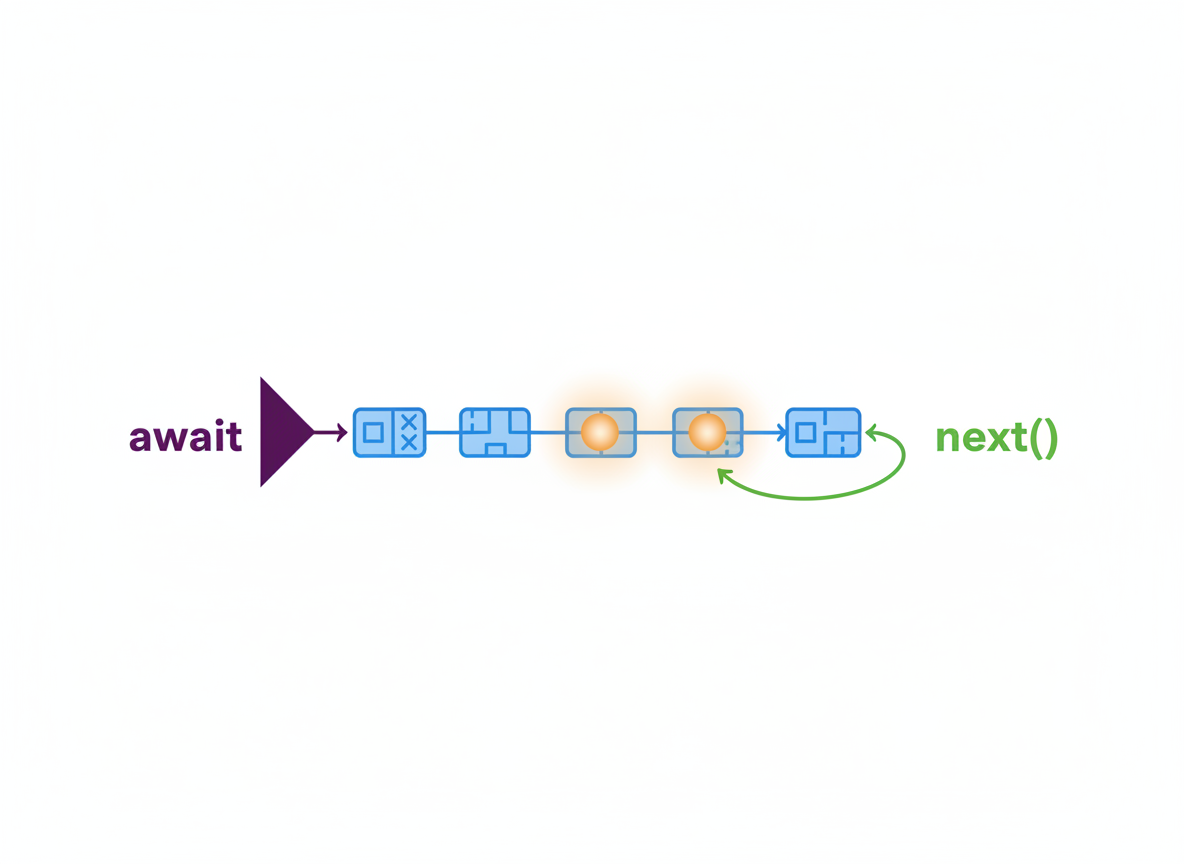
next() on an async iterator returns a promise that resolves to { value, done }.
// Drive an async iterator manually with await it.next()
(async function () {
  async function* two() {
    yield "A";
    yield "B";
  }
  const it = two();
  console.log(await it.next()); // { value: "A", done: false }
  console.log(await it.next()); // { value: "B", done: false }
  console.log(await it.next()); // { value: undefined, done: true }
})();
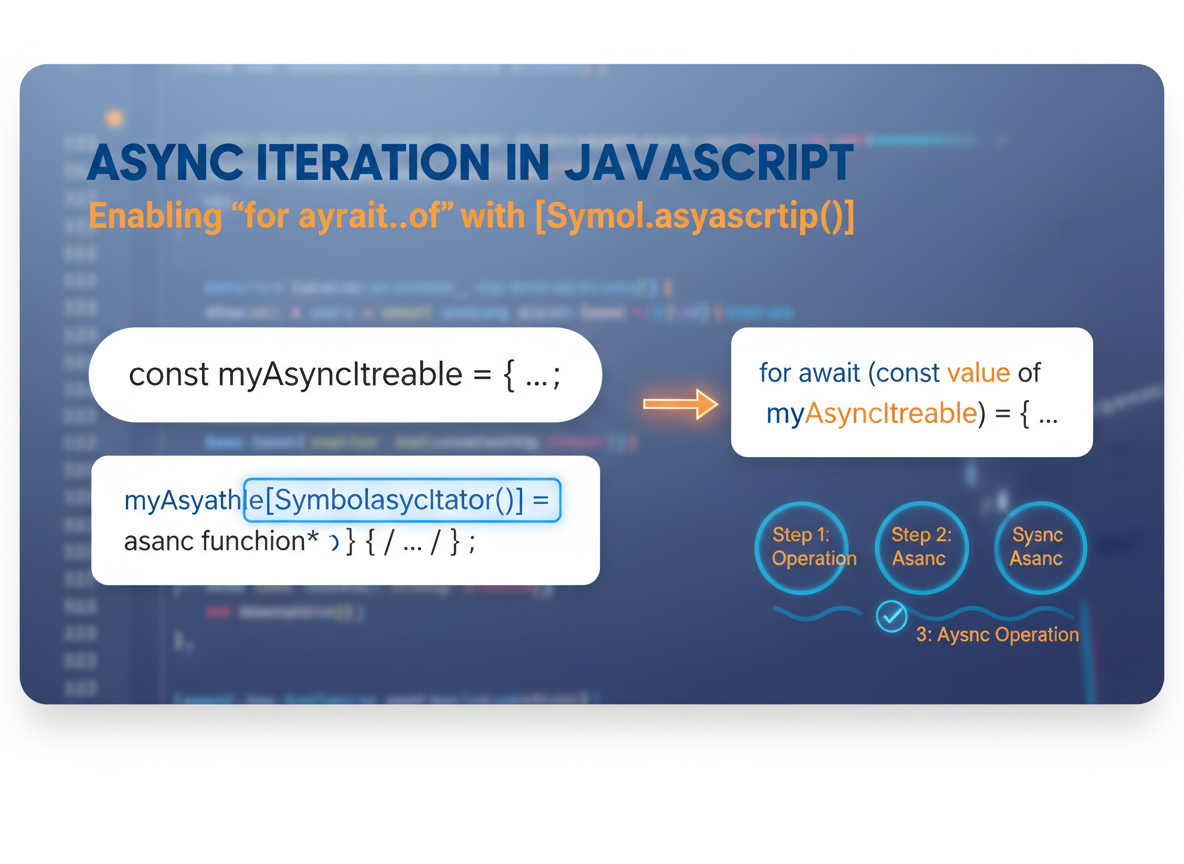
Symbol.asyncIterator on objects
Add [Symbol.asyncIterator]() that returns an async iterator to make an object work with for await...of.
// Mark a plain object as async-iterable via Symbol.asyncIterator
(async function () {
  const AsyncTwice = {
    from: function (a, b) {
      return {
        a: a, b: b,
        [Symbol.asyncIterator]: async function () {
          let step = 0;
          return {
            next: async function () {
              if (step === 0) { step = 1; return { value: a, done: false }; }
              if (step === 1) { step = 2; return { value: b, done: false }; }
              return { value: undefined, done: true };
            }
          };
        }
      };
    }
  };

  for await (const v of AsyncTwice.from("X", "Y")) {
    console.log("from object:", v);
  }
})();
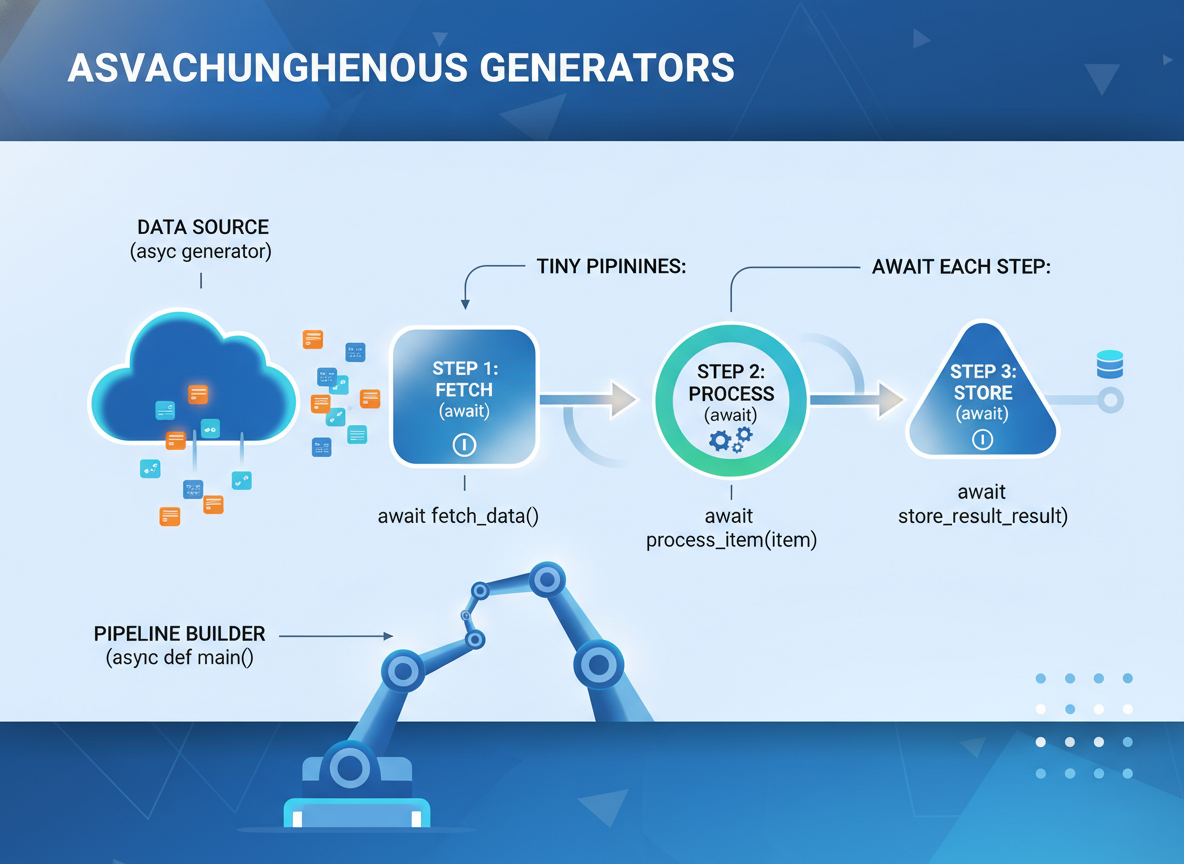
Async map pipeline
Compose async generators to build tiny pipelines that await each step.
// Async map: transform values lazily while awaiting work
(async function () {
  async function* countAsync(n) {
    for (let i = 1; i <= n; i = i + 1) {
      yield i;
    }
  }

  async function* asyncMap(iterable, fn) {
    for await (const v of iterable) {
      // fn can be async; await its result
      const out = await fn(v);
      yield out;
    }
  }

  const doubled = asyncMap(countAsync(4), async function (x) {
    // simulate async transform (no real delay for demo)
    return x * 2;
  });

  const collected = [];
  for await (const v of doubled) {
    collected.push(v);
  }
  console.log("doubled async:", collected);
})();
Good habits
Tips:
- for await...of needs an async iterable (Symbol.asyncIterator).
- Use async function* to define async generators easily.
- Each next() is awaited; keep work small to stay responsive.
Async iterable basics quiz
Quick check: Async iterable requirement.
Recap
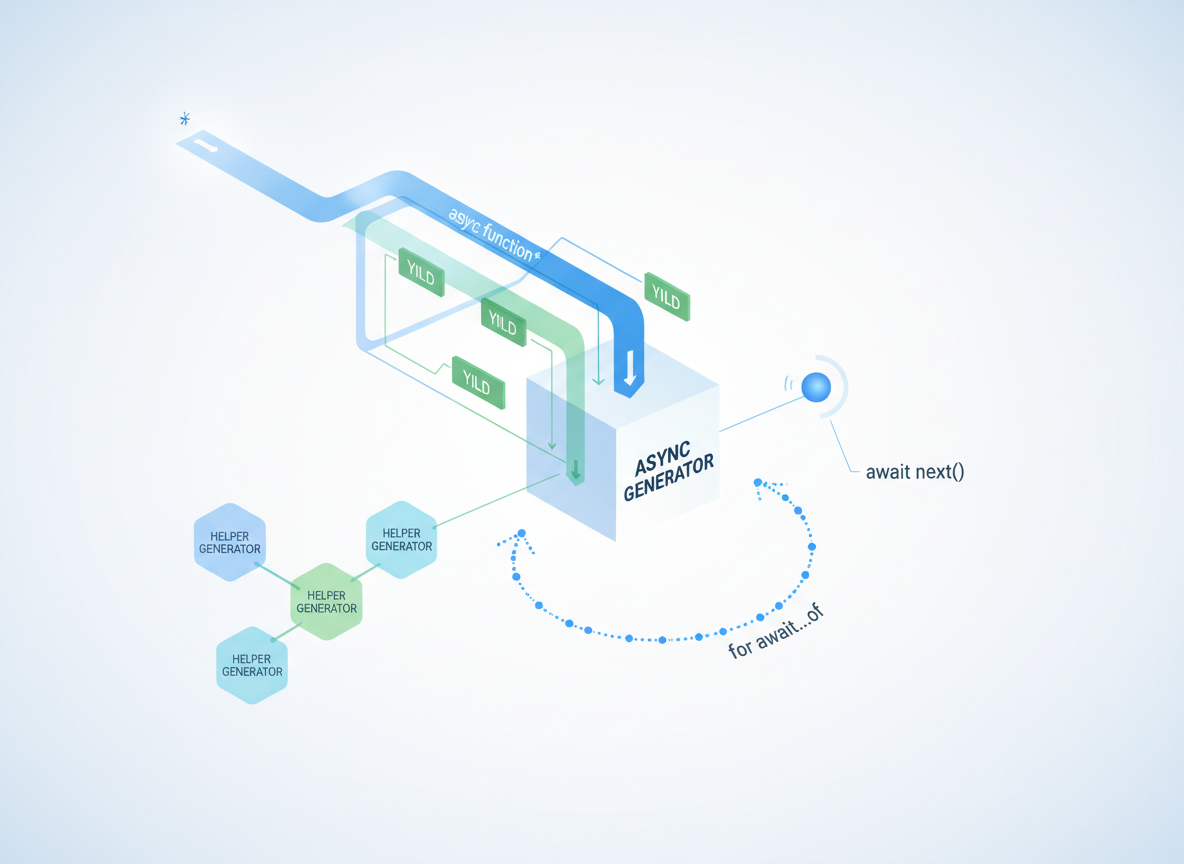
Recap: Use async function* and yield to create async generators. Loop with for await...of, or await next() manually. Build tiny async pipelines with helper generators.

Learn JavaScript with an AI tutor — free
Write and run real code in your browser, get instant help from a 24/7 AI tutor, and pick up where you left off on the web or in the app.
- Courses
- 59
- Lessons
- 200
Frequently Asked Questions
Is the “Async iterators — for await...of and async generators” lesson free?
Yes — any 3 lessons of the JavaScript Academy learning path, including “Async iterators — for await...of and async generators”, are free to read in full here on the web. After that, CoddyKit PRO unlocks every lesson, plus interactive practice with a built-in code editor and a 24/7 AI tutor. The JavaScript Academy course includes 3 lessons in total.
What will I learn in “Async iterators — for await...of and async generators”?
Use async generators and for await...of to consume values that arrive over time. Learn Symbol.asyncIterator and simple async pipelines. You practise JavaScript Academy with hands-on code you run directly in the browser, and a 24/7 AI tutor answers your questions as you work through the lesson.
Do I need any experience to start JavaScript Academy?
No prior experience is required. JavaScript Academy on CoddyKit is structured for beginners through advanced learners, so you can start here or from the beginning and move at your own pace. This is lesson 3 of 3.
How long does the “Async iterators — for await...of and async generators” lesson take?
Most CoddyKit lessons take about 5–10 minutes. Each one is bite-sized and interactive, so you make steady progress and pick up exactly where you left off across the web and the app.
Can I write and run code in this JavaScript Academy lesson?
Yes. Every JavaScript Academy lesson includes a built-in code editor, so you write and run real code right in your browser and get instant AI feedback — no local setup required.
All lessons in this course
- Iterable protocol and for...of
- Generator functions, yield, and small pipelines
- Async iterators — for await...of and async generators